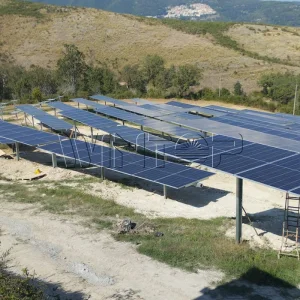
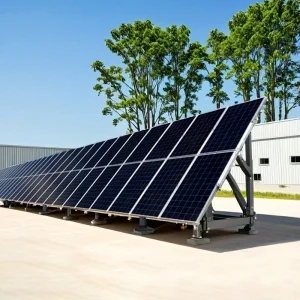
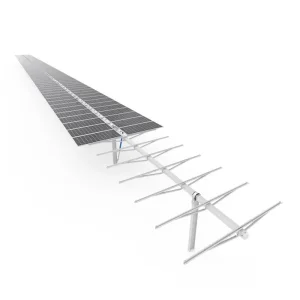
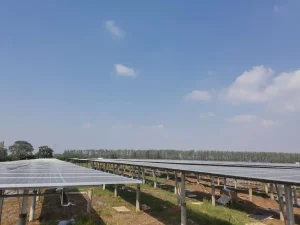
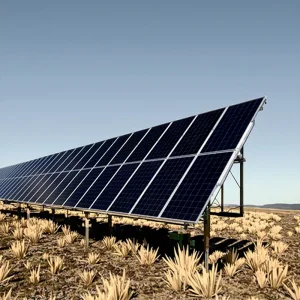
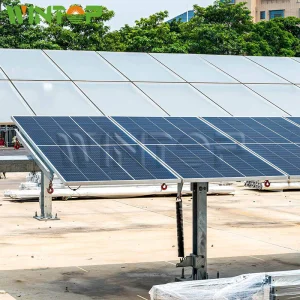
Engineered to maximize yield in high diffuse-light environments while offering extreme wind defense mechanisms.
As a nation historically defined by its rich hydrocarbon sector, Trinidad and Tobago is executing a structural shift toward sustainable energy. The government's pledge under the Paris Agreement to achieve 30% power generation from renewable resources by 2030, paired with national targets to reduce greenhouse gas emissions, has catalyzed a surge in commercial, industrial, and utility-scale solar projects. Key industrial regions, such as the Point Lisas Industrial Estate in Trinidad and the Cove Eco-Industrial Park in Tobago, are leading this clean energy transition.
Implementing photovoltaic systems in this region presents distinct engineering challenges. Unlike continental regions, Trinidad and Tobago experiences a maritime tropical climate characterized by high humidity, constant salt spray, intense solar irradiance with sudden cloud cover variations, and seasonal tropical storms. Standard fixed-tilt racking systems often fall short of economic expectations, leaving valuable clean energy unrealized. This is where single-axis solar trackers become critical. By dynamically adjusting the solar panel angle throughout the day, trackers increase overall energy production by up to 25% to 30% compared to static structures, making projects financially viable even under high local humidity and fluctuating cloud cover.
Globally, the solar tracking industry has transitioned from a niche premium solution to the standard for utility-scale solar installations. Modern single-axis tracker designs focus heavily on structural stability, integration with high-power bifacial modules, and smart backtracking algorithms. Artificial Intelligence (AI) and machine learning are now deployed directly within tracker controllers (TCUs) to calculate optimal angles during diffuse lighting conditions, which are common in tropical rainforest zones. Instead of relying solely on astronomical calculations, smart tracking systems use real-time irradiance sensors to maximize light capture from cloudy skies, translating directly to higher ROI for project developers.
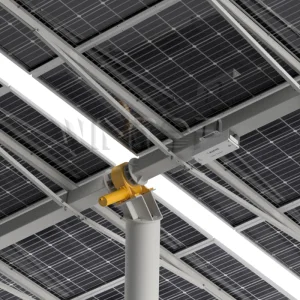
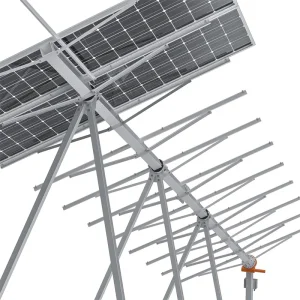
Precision-engineered drive configurations designed to resist torsional fluttering and structural deformation under sudden wind gusts.
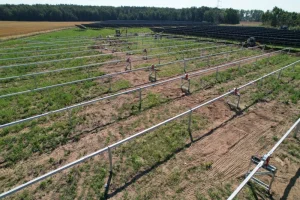
Custom technology integrations built to withstand high relative humidity, tropical storms, and localized terrain variances.
Equipped with wind sensors that automatically trigger stow mode within minutes when wind speeds exceed safety thresholds. Systems tilt to a flat 0-degree angle or optimized aerodynamic configurations to minimize structural drag and survive category-4 winds.
Trinidad & Tobago's high humidity and seaside installations require advanced coatings. Our structures use hot-dip galvanized steel (HDG) and specialized ZAM (Zinc-Aluminum-Magnesium) coatings to guarantee over 25 years of operation without structural corrosion.
Utilizes active GPS positioning coupled with astronomical calculations to optimize tracking accuracy. During early morning and late afternoon, the AI-driven backtracking feature adjusts panels to eliminate row-to-row shading, maximizing energy generation.
1. Industrial Self-Generation (Point Lisas & Port of Spain): Heavy manufacturing facilities can use horizontal single-axis solar trackers to match high daytime industrial energy demands. Utilizing tracking systems minimizes utility peak charges by flattening the solar generation curve and extending the energy peak into the early evening.
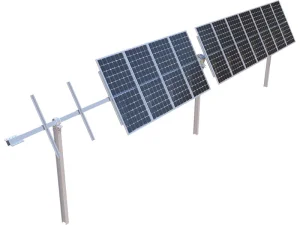
2. Eco-Tourism Grid Support (Tobago & Coastal Resorts): Local hospitality and clean tech clusters require reliable power. Integrating dual-portrait (2P) or 1-portrait (1P) single-axis trackers with energy storage systems provides stable micro-grid operations, reducing dependence on diesel generators and maintaining pristine local environments.
3. Distributed Agricultural Systems (Central & Southern Trinidad): With land optimization in mind, tracking configurations can be set up in agrivoltaic arrangements. Raising the axis clearance enables machinery movement and livestock grazing underneath, optimizing land use while generating clean power.
Explore our industrial-grade, certified components designed for developers, EPCs, and utility project leads.
Deploying a solar tracker in Trinidad and Tobago requires careful structural engineering. In tropical maritime regions, trackers face complex wind forces. The design must address static wind loads as well as dynamic aeroelastic phenomena like torsional flutter and galloping. At RayBoost Solar, we address these challenges through advanced wind tunnel testing and dynamic simulations, creating a reliable tracking system for extreme weather environments.
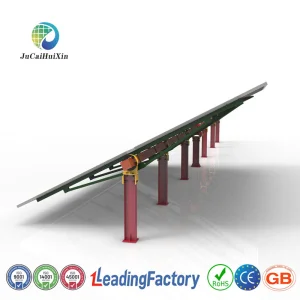
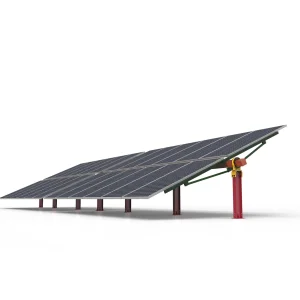
Selecting the drive mechanism is key to the system's longevity. Our horizontal single-axis solar trackers utilize closed slewing drives that protect gears from sand, dust, and salt spray. These drives offer high holding torque to prevent unexpected rotation during tropical depressions. For smaller distributed commercial systems, our linear actuator designs provide cost-effective tracking adjustments, striking an optimal balance between initial investment and long-term durability.
Modern solar installations rely on intelligent operations. RayBoost Solar trackers are equipped with intelligent control systems featuring:
Your Trusted Global Clean Energy Partner, Delivering High-Performance Solar Tracking Solutions.
Hangzhou RayBoost Solar Co., Ltd. is a professional manufacturer specializing in solar energy solutions, supported by advanced testing facilities and strong technical expertise. Located in Hangzhou, just about 50 minutes by high-speed train from Shanghai Airport, the company benefits from convenient transportation and a well-developed industrial environment, enabling efficient service for global customers.
RayBoost Solar is dedicated to providing comprehensive one-stop solar energy solutions to clients worldwide. The company’s business covers portable power stations, hybrid solar inverter systems for both on-grid and off-grid applications, energy storage systems, as well as integrated energy solutions for industrial, commercial, and residential use, including balcony solar systems. With its own manufacturing facilities, RayBoost Solar produces key components such as lithium batteries, solar inverters, portable power stations, and complete solar system combinations, ensuring reliable quality and supply chain control.
To maintain high standards, the company has introduced advanced automated production equipment from Italy and Japan. Combined with an experienced research and development team, RayBoost Solar continuously improves product performance, durability, and intelligent energy management capabilities, meeting the evolving demands of the global renewable energy market.
In terms of service, RayBoost Solar offers a full-process solution covering system design, production, sales, and after-sales support. Each project is customized according to the specific installation conditions. Before order confirmation, customers are required to provide site dimensions and photos, allowing the company to deliver accurate and optimized system solutions. While installation services are not included, detailed guidance and technical support are provided to ensure smooth project implementation.
Quality is a core priority at RayBoost Solar. All products undergo strict testing procedures and comply with international standards, ensuring safety, reliability, and long service life. Backed by solid manufacturing capabilities and a comprehensive quality control system, the company has built a strong reputation among its global partners. Looking ahead, RayBoost Solar is committed to promoting clean and sustainable energy worldwide, aiming to become a trusted long-term partner for customers across different markets.
Detailed technical queries regarding deployment, environmental resilience, and commercial considerations in the Caribbean.
Get in touch with Hangzhou RayBoost Solar Co., Ltd. today. Our engineering team will evaluate your site coordinates, local wind profiles, and energy goals to deliver a custom single-axis tracker quote.
Send Inquiry Now RayBoost Solar