High-efficiency, wind-resilient single-axis photovoltaic tracking hardware, customized engineering solutions, and tier-1 supplier logistics tailored for commercial, industrial, and utility-scale solar deployments across Georgia.
Engineered for high solar irradiance performance, dynamic slope adaptability, and extreme weather resilience required in the Southeastern US solar belt.
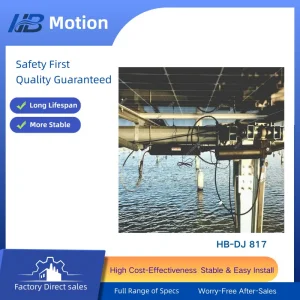
Heavy-duty linear actuator engineering optimized for Georgia utility-scale installations with high dynamic wind stability.
View Product Specs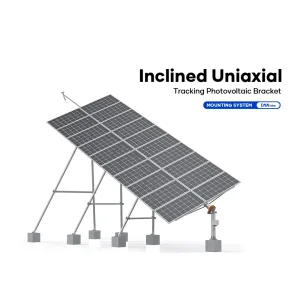
High-precision GPS automated closed-loop tracking system delivering enhanced energy production during off-peak morning and evening hours.
View Product Specs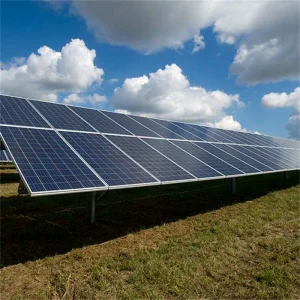
Flexible terrain-adaptive single-axis mounting structures ideal for rolling hills and varied topography in North Georgia regions.
View Product Specs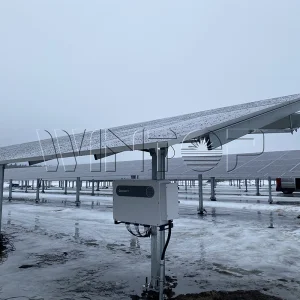
Direct factory supply featuring dual-row linkage actuation to maximize structural ROI and reduce overall mechanical drive cost.
View Product SpecsEvaluating solar irradiance profiles, micro-climatic resilience requirements, and economic incentives driving utility and C&I tracking adoption across Georgia.
Georgia benefits from robust Global Horizontal Irradiance ranging between 4.8 to 5.4 kWh/m²/day. Horizontal single-axis trackers shift the solar panel orientation dynamically along the east-west axis, capturing high direct normal irradiance (DNI) to increase annual megawatt-hour energy production by 22% to 30% over static ground mount structures.
Coastal and Southern Georgia regions frequently face severe weather patterns, tropical storm fronts, and localized high-wind events. Advanced single-axis trackers integrated with automated wind sensors execute emergency stow protocols within 10–12 seconds, pitching tables to defense angles (0° or 30°-45°) to prevent torsional flutter and dynamic galloping.
When combined with N-type TOPCon or HJT bifacial solar panels, single-axis trackers yield additional power gains from ground-reflected diffuse light. Georgia's red clay soils and agricultural ground covers deliver background albedo coefficients of 18% to 25%, providing an extra 6% to 10% rear-side yield uplift.
Georgia has consistently ranked as one of the fastest-growing solar markets in the United States, driven by large-scale utility procurement, corporate clean energy power purchase agreements (PPAs), and major data center developments requiring around-the-clock clean energy offset. Single-axis solar trackers serve as the core mechanical standard for commercial and utility solar farms across the state because they widen the generation curve—producing substantial power earlier in the morning and later into the peak-demand evening period compared to fixed tilt systems.
Deploying single-axis trackers supplied directly from qualified high-precision factories ensures compliance with domestic engineering standards (including ASCE 7 wind load specs and UL certifications), while reducing Levelized Cost of Energy (LCOE) by up to 18%.
Explore the mechanical, electronic, and structural design features that ensure high stability, minimal maintenance, and maximum power conversion efficiency.
Single-axis trackers utilize high-torque slewing drives or industrial linear actuators depending on row layout and terrain geometry. Enclosed slewing drives feature hourglass worm gear technology offering 360-degree holding torque, IP65 dust/water resistance, and backlash compensation to prevent gear tooth wear during sudden gust forces.
Equipped with 32-bit MCU microprocessors, tracker control units (TCUs) combine precise solar path calculations with intelligent backtracking algorithms. During early morning and late afternoon hours, the tracker slightly un-tilts to prevent adjacent rows from casting shadows on one another, maximizing net yield output per square meter of land.
To solve dynamic aeroelastic instability (wind-induced torsional flutter), modern trackers feature distributed multi-point drive shafts and heavy-duty hydraulic dampers. This dynamic stabilization mechanism ensures full structural integrity under turbulent winds exceeding 130–140 mph.
Trackers utilize dedicated small-capacity PV auxiliary modules paired with internal lithium iron phosphate (LiFePO4) battery packs, making each tracker row self-powered. Communication across the field is established wirelessly via LoRa or Zigbee mesh networks, eliminating thousands of meters of trenching and control cabling.
| Technical Parameter | Horizontal Single-Axis Tracker | Tilted Single-Axis Tracker |
|---|---|---|
| Tracking Range (Tilt Angle) | ±60° (Total 120° continuous rotation) | ±45° to ±60° (with fixed tilt offset) |
| Tracking Accuracy | ≤ 1.0° (Closed-loop algorithm) | ≤ 0.5° (GPS Sensor + Astronomical) |
| Drive Mechanism | Slewing Gear / Multi-point Linkage | Linear Actuator / Heavy-duty Slewing Ring |
| Max Operating Wind Speed | 45 mph (72 km/h) before stow mode | 40 mph (64 km/h) before stow mode |
| Survival Wind Speed | 140 mph (225 km/h) fully stowed | 130 mph (210 km/h) fully stowed |
| Corrosion Protection | Hot-Dip Galvanized Steel (HDG ISO 1461) / ZAM | Hot-Dip Galvanized / Anodized Aluminum Alloy |
| Operating Temperature | -40°C to +70°C (-40°F to 158°F) | -35°C to +65°C (-31°F to 149°F) |
| Communication Protocols | Wireless LoRa / RS485 / Modbus RTU | Zigbee / RS485 / Wireless Mesh |
Direct manufacturer capabilities ensuring precision quality control, international compliance, and seamless global logistics for industrial partners.
Hangzhou RayBoost Solar Co., Ltd. is a professional manufacturer specializing in solar energy solutions, supported by advanced testing facilities and strong technical expertise. Located in Hangzhou, just about 50 minutes by high-speed train from Shanghai Airport, the company benefits from convenient transportation and a well-developed industrial environment, enabling efficient service for global customers.
RayBoost Solar is dedicated to providing comprehensive one-stop solar energy solutions to clients worldwide. The company’s business covers portable power stations, hybrid solar inverter systems for both on-grid and off-grid applications, energy storage systems, as well as integrated energy solutions for industrial, commercial, and residential use, including balcony solar systems. With its own manufacturing facilities, RayBoost Solar produces key components such as lithium batteries, solar inverters, portable power stations, and complete solar system combinations, ensuring reliable quality and supply chain control.
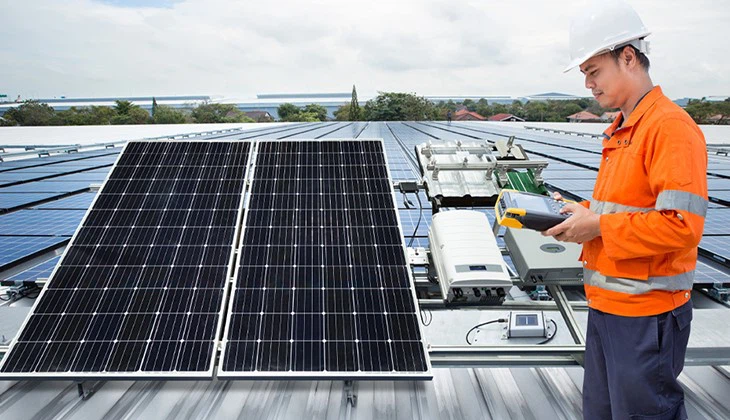
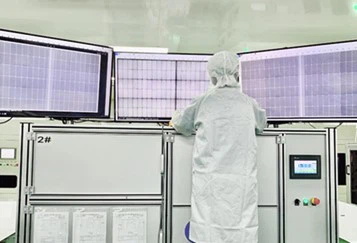
To maintain high standards, the company has introduced advanced automated production equipment from Italy and Japan. Combined with an experienced research and development team, RayBoost Solar continuously improves product performance, durability, and intelligent energy management capabilities, meeting the evolving demands of the global renewable energy market.
In terms of service, RayBoost Solar offers a full-process solution covering system design, production, sales, and after-sales support. Each project is customized according to the specific installation conditions. Before order confirmation, customers are required to provide site dimensions and photos, allowing the company to deliver accurate and optimized system solutions. While installation services are not included, detailed guidance and technical support are provided to ensure smooth project implementation.
Quality is a core priority at RayBoost Solar. All products undergo strict testing procedures and comply with international standards, ensuring safety, reliability, and long service life. Backed by solid manufacturing capabilities and a comprehensive quality control system, the company has built a strong reputation among its global partners.
Looking ahead, RayBoost Solar is committed to promoting clean and sustainable energy worldwide. By delivering innovative, efficient, and environmentally friendly solar solutions, the company aims to become a trusted long-term partner for customers across different markets. Visitors and partners from around the world are warmly welcomed to collaborate and achieve mutually beneficial growth.
Quantifying the economic advantage of deploying single-axis tracking hardware over fixed-tilt racking in Southeastern US commercial solar projects.
| Project Financial Metric | Standard Fixed-Tilt System (20° Tilt) | RayBoost Single-Axis Tracker System | Variance / Advantage |
|---|---|---|---|
| Initial Mechanical Racking CAPEX | $0.10 - $0.12 / Watt | $0.16 - $0.19 / Watt | + $0.06 / Watt baseline capital investment |
| Annual Specific Yield (Georgia) | 1,420 kWh / kWp | 1,810 kWh / kWp | +27.4% Higher Specific Output |
| 25-Year Cumulative Output (10MW) | 337,250 MWh | 430,000 MWh | +92,750 MWh Additional Power Generation |
| Levelized Cost of Energy (LCOE) | $0.048 / kWh | $0.039 / kWh | 18.7% Reduction in Levelized Cost |
| Internal Rate of Return (IRR) | 8.2% | 12.6% | +4.4% Financial Return Acceleration |
| Investment Payback Period | 7.2 Years | 5.1 Years | Payback reduced by 2.1 Years |
*Note: Financial modeling assumes average Georgia solar irradiance profile, PPA electricity sale rate of $0.065/kWh, and standard O&M allocation allowances. Actual returns vary by site micro-climate and utility tariff structure.
Explore our comprehensive product catalog of single-axis tracker bracket systems, slew drives, and integrated kit hardware designed for international solar developers.
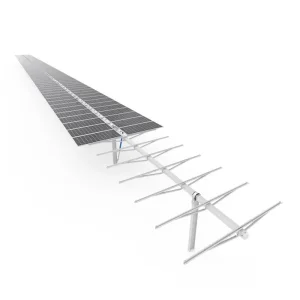
Utility grid-tied single-axis tracking assembly optimized for seamless synchronization with central and string inverter architectures.
View Product Specs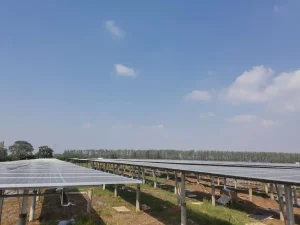
TÜV Rheinland certified horizontal flat single-axis system featuring heavy galvanization and extreme fatigue stress resistance.
View Product Specs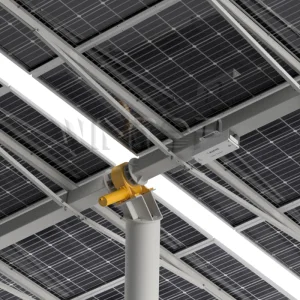
Low-profile horizontal mounting system designed for high solar density, fast ground pile installation, and minimal structural wind resistance.
View Product Specs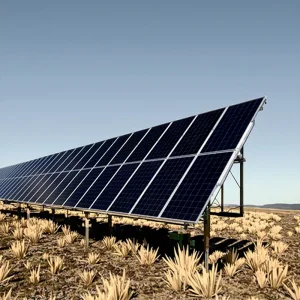
Heavy-duty industrial racking engineered for wide-format 600W+ high-wattage module support and high torsional rigidity.
View Product Specs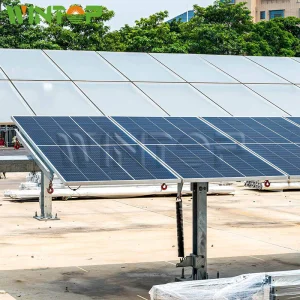
All-in-one standardized structural kit package including pre-drilled torque tubes, bearing housings, controller, and dampeners.
View Product Specs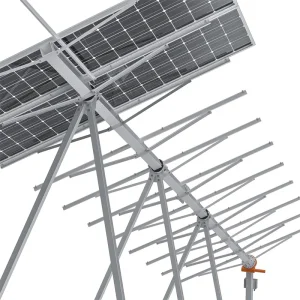
Fixed pitch plus rotational axis tracking solution ideal for higher latitude sites requiring elevated elevation capture angles.
View Product Specs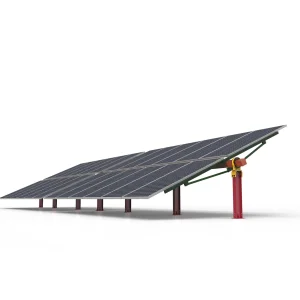
Robust C&I tracking bracket designed for flat factory land, commercial microgrids, and high utility tariff zones.
View Product Specs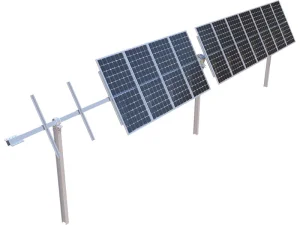
Automated single-axis racking built with structural steel channels for high durability against ambient weather degradation.
View Product Specs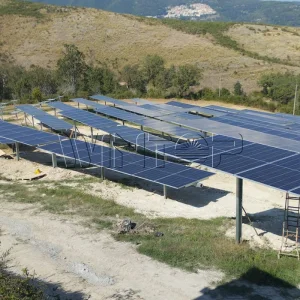
High-efficiency tracker system featuring multi-axis compatibility and low internal power operational loss.
View Product Specs
1P (One Portrait) optimized configuration engineered to reduce structural steel consumption and speed up installation timelines.
View Product Specs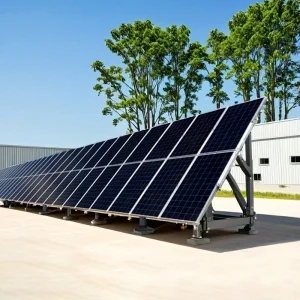
Lightweight, corrosion-resistant anodized aluminum tracker frame integrated with a sealed slewing drive assembly.
View Product Specs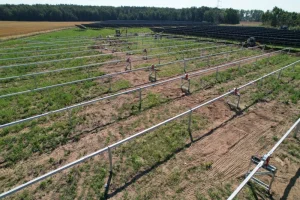
Smart IoT-enabled single-axis slew drive system offering remote monitoring, predictive maintenance alerts, and cloud telemetry.
View Product SpecsEnsuring frictionless international shipping through the Port of Savannah and complete compliance with US electrical and structural standards.
RayBoost Solar optimizes component containerization, delivering pre-assembled torque tubes and drive kits directly to the Port of Savannah. Freight pre-sorting minimizes demurrage and inland trucking lead times to jobsites across Atlanta, Macon, Augusta, and Columbus.
All single-axis tracker structural components comply with UL 2703 (Mounting systems, mounting devices, clamping/retention devices, and ground lugs) and IEC 62817 (Photovoltaic systems - Design qualification of solar trackers), ensuring smooth AHJ engineering plan approvals.
Prior to project execution, RayBoost Solar engineers provide site-specific pile pull-out force calculations, 3D dynamic wind simulations, foundation loading schedules, and single-line electrical control diagrams customized to your site boundaries.
Strategic engineering developments shaping the next decade of intelligent solar tracking performance.
Integrating local sky-imager sensors and neural network cloud data to calculate dynamic angle offsets during overcast weather, capturing maximum scattered diffuse radiation rather than following clear-sky solar algorithms.
Next-generation direct-drive torque motors replacing mechanical worm gears, eliminating mechanical play, gear friction losses, and routine lubrication maintenance requirements across a 30-year operational span.
Custom torque tube height elevations (up to 3.5 meters) enabling dual-use land development—permitting agricultural machinery or livestock grazing underneath single-axis trackers across rural Georgia farmland.
Expert insights regarding single-axis tracker sourcing, foundation design, and operational compliance in Georgia.
Georgia features diverse soil conditions ranging from dense red clay in the Piedmont region to loose sandy soil near the Atlantic coast. Single-axis solar trackers utilize driven C-channel or H-pile posts for high-density clay soils, providing rapid hydraulic driving speed and strong lateral resistance. For coastal or low-bearing sandy soils, ground screw anchors or concrete cast-in-place micro-piles are deployed to prevent vertical pull-out during storm events.
In Georgia, single-axis solar trackers typically increase annual total energy output by 20% to 30% over standard 20° fixed-tilt racking systems. When paired with bifacial PV modules, total energy gains can reach up to 35%, depending on ground albedo, row spacing (GCR), and localized cloud cover patterns.
Our trackers are equipped with automated wind sensor anemometers and integrated weather telemetry. When wind speeds cross predefined safety thresholds (typically 40–45 mph), the Tracker Control Unit (TCU) automatically moves the tracker row into a flat or low-angle stow position (0° to 30°), engaging dynamic hydraulic dampers to withstand survival winds up to 140 mph (225 km/h).
To prepare an accurate structural quotation and system layout, clients should provide ground site boundary dimensions (or CAD/KMZ site files), topographic slope data, local design wind speed requirements, solar panel specifications (dimensions, weight, power output), and soil geotechnical reports if available.
Standard factory manufacturing lead time ranges from 4 to 6 weeks depending on system MW volume. Trackers are backed by a comprehensive warranty structure: 10 years on structural hot-dip galvanized steel components, and 5 years on electronic drive actuators, motors, controller units, and sensors.
Partner with a trusted tier-1 manufacturer. Contact our engineering team today to receive site-specific single-axis tracker structural designs, wind load evaluations, and direct factory pricing.
 RayBoost Solar