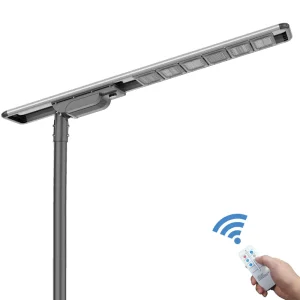
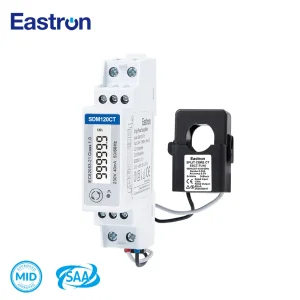
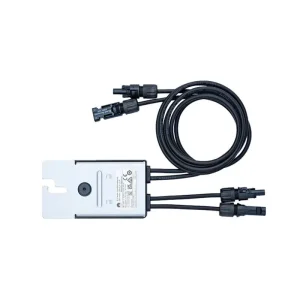
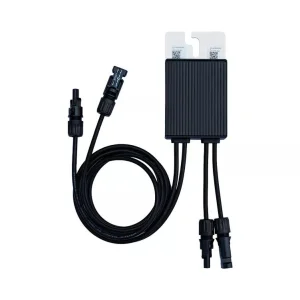
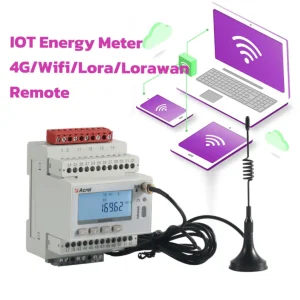
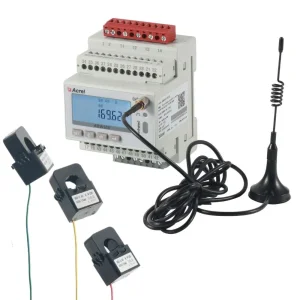
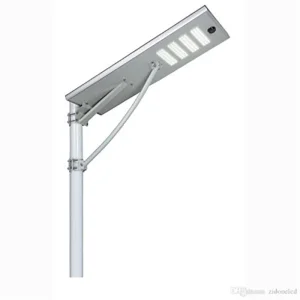
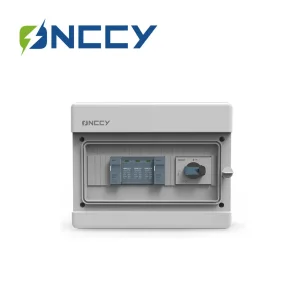
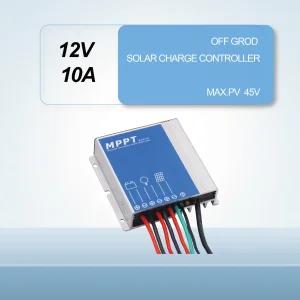
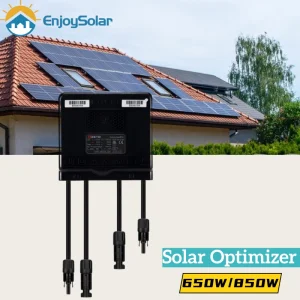
State-of-the-art hardware powering high-efficiency energy harvest, system monitoring, and power optimization.
Decoding the shifting landscape of solar resource assessment and asset performance optimization.
Global developers demand ISO 9060 Class A Pyranometers to benchmark Performance Ratio (PR) with less than 1% uncertainty. Real-time irradiance data determines grid penalty structures and investment security metrics for multi-gigawatt portfolios.
Industrial OEMs seek modular sensor blocks and customizable communication protocols (Modbus RTU over RS485, SDI-12, or analog 4-20mA interfaces) that seamlessly interface with diverse SCADA systems, remote telemetry units (RTUs), and weather stations.
Procurement departments require meters capable of sustaining high-UV exposure, extreme thermal ranges (-40°C to +80°C), and coastal salt mist. Materials like quartz domes, marine-grade anodized aluminum, and IP67/IP68 hermetic sealing are mandatory.
In the competitive landscape of utility-scale solar energy and large-scale commercial deployments, the accuracy of solar irradiance measurement is a primary driver of financial viability. Sourcing specialists are no longer searching for generic light sensors; they require highly specialized, calibrated custom OEM solar irradiance meters. These instruments serve as the foundational truth for performance evaluations, contract compliance, and intelligent system diagnostics.
Furthermore, EPC (Engineering, Procurement, and Construction) companies require instrumentation that can mitigate risk. By providing raw, uncalibrated data, poor sensors lead to false alarms or missed performance degradation events. Precision OEM meters allow operators to separate resource variation from actual mechanical or electrical faults in the array, driving down operations and maintenance (O&M) costs.
Integrating metrological sensors with large-scale solar project management, grid stability, and performance analysis.
For large-scale utility sites, irradiance sensors are arranged at strategic sub-locations to measure Plane-of-Array (POA) and Global Horizontal Irradiance (GHI). These readings feed directly into SCADA frameworks to determine real-time solar farm degradation rates and operational efficiency indices.
With bifacial technology dominating new PV installations, measuring albedo—the ratio of reflected to incident light—is critical. Custom dual-dome OEM pyranometers measure both incoming sky radiation and ground-reflected radiation, allowing accurate modeling of rear-side gains.
C&I projects demand cost-effective, low-maintenance photodiode-based irradiance meters. These smart, integrated sensors monitor system degradation, dust/soiling build-up, and localized shading losses, triggering automated cleaning cycles when performance drops below threshold values.
Measurement Uncertainty
Compliance Standards
Modbus Integration
Custom OEM Calibrated
The convergence of advanced optical sensors, materials science, and intelligent edge-computing analytics.
Solar irradiance detection has transitioned from simple thermal comparison plates to sophisticated thermopile and silicon-photodiode architectures. Modern silicon reference cells match the exact spectral response of the target PV modules, giving an accurate representation of the energy available to the active PV junctions. In contrast, broadband thermopile instruments measure the total solar energy spectrum (300 to 3000 nm), providing the absolute meteorological resource data.
Our technical roadmap details several critical advancements currently being integrated into our custom OEM meter designs:
Adherence to the ISO 9060 standard governs classification and calibration specifications. Modern custom OEM projects require compliance with the latest 2018 revision, separating devices into "Spectrally Flat Class A" (highest precision), "Spectrally Flat Class B", and "Spectrally Flat Class C". By aligning our engineering tolerances with international metrology, Hangzhou RayBoost Solar ensures that global buyers obtain data that is legally and financially defensible during third-party audit procedures.
Mapping market dynamics and regional regulatory drivers shaping the deployment of solar energy monitoring technologies.
Driven by strict compliance mandates and high carbon taxes, European developers focus on absolute accuracy and localized calibration traceability (DAkkS, COFRAC). They demand sensors integrated directly with building-integrated PV (BIPV) systems.
With massive investments from the IRA (Inflation Reduction Act), large utility installations require rugged, long-lasting hardware certified for UL/CSA standards, capable of surviving high-snow loads, dessert heat, and extreme tracking angles.
The APAC region is the global manufacturing hub for PV cells, necessitating ultra-precise irradiance meters in factory QA settings. Meanwhile, the Middle East represents the largest growth market for high-dust, desert-ready pyranometers.
Combining world-class engineering, automated production lines, and customized product architecture.
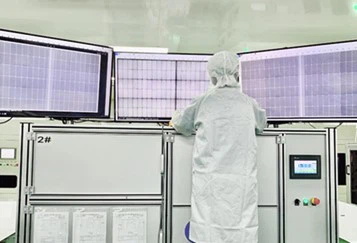
Hangzhou RayBoost Solar Co., Ltd. is a professional manufacturer specializing in solar energy solutions, supported by advanced testing facilities and strong technical expertise. Located in Hangzhou, just about 50 minutes by high-speed train from Shanghai Airport, the company benefits from convenient transportation and a well-developed industrial environment, enabling efficient service for global customers.
RayBoost Solar is dedicated to providing comprehensive one-stop solar energy solutions to clients worldwide. The company’s business covers portable power stations, hybrid solar inverter systems for both on-grid and off-grid applications, energy storage systems, as well as integrated energy solutions for industrial, commercial, and residential use, including balcony solar systems. With its own manufacturing facilities, RayBoost Solar produces key components such as lithium batteries, solar inverters, portable power stations, and complete solar system combinations, ensuring reliable quality and supply chain control.
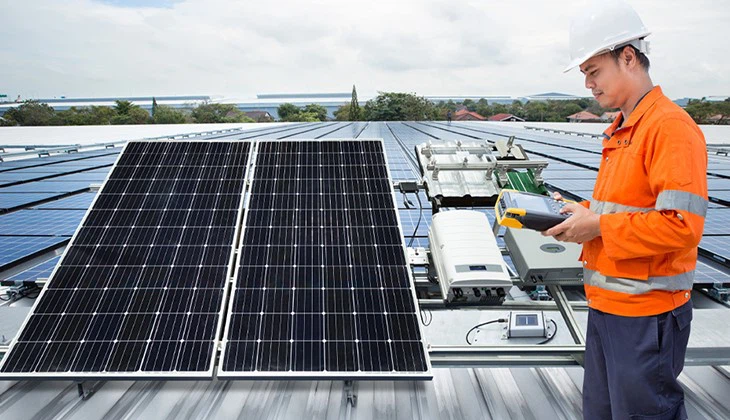
To maintain high standards, the company has introduced advanced automated production equipment from Italy and Japan. Combined with an experienced research and development team, RayBoost Solar continuously improves product performance, durability, and intelligent energy management capabilities, meeting the evolving demands of the global renewable energy market.
In terms of service, RayBoost Solar offers a full-process solution covering system design, production, sales, and after-sales support. Each project is customized according to the specific installation conditions. Before order confirmation, customers are required to provide site dimensions and photos, allowing the company to deliver accurate and optimized system solutions. While installation services are not included, detailed guidance and technical support are provided to ensure smooth project implementation.
Quality is a core priority at RayBoost Solar. All products undergo strict testing procedures and comply with international standards, ensuring safety, reliability, and long service life. Backed by solid manufacturing capabilities and a comprehensive quality control system, the company has built a strong reputation among its global partners.
Looking ahead, RayBoost Solar is committed to promoting clean and sustainable energy worldwide. By delivering innovative, efficient, and environmentally friendly solar solutions, the company aims to become a trusted long-term partner for customers across different markets. Visitors and partners from around the world are warmly welcomed to collaborate and achieve mutually beneficial growth.
Assuring international quality conformance, calibration traceability, and regional regulatory alignment.
Deploying solar measurement systems globally requires deep familiarity with local engineering requirements, electric codes, and meteorological guidelines. All custom OEM sensors manufactured under the RayBoost brand or built to client specifications undergo factory calibration traceable directly to the World Radiometric Reference (WRR) in Davos, Switzerland. This establishes an unbroken chain of precision back to global standards, assuring developers that project performance datasets are highly accurate and bankable.
To facilitate smooth import and local deployment, we guarantee full compliance across major regulatory boundaries:
Clear, direct, and technical answers addressing the most common concerns in global solar irradiance sensor procurement.
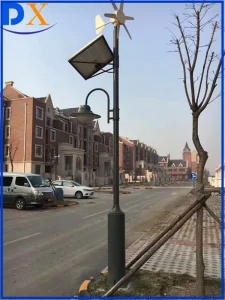
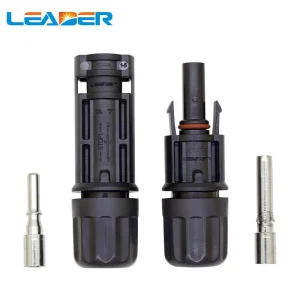
Explore our wider range of high-efficiency street lights, charge controllers, and heavy-duty cabling accessories.
 RayBoost Solar