Maximize energy generation, monitor load curves, and optimize track algorithms with our advanced hardware components built for digital integration.
Simulation Accuracy
Design Time Reduction
Global Grid Standards
Exporting Countries
How digital engineering software is redefining efficiency and lowering Levelized Cost of Energy (LCOE) across the PV value chain.
In the contemporary renewable energy sector, the integration of Solar Design Software has transitioned from a competitive advantage to an absolute operational necessity. As global solar PV capacities scale towards terawatt levels, developers, EPC (Engineering, Procurement, and Construction) firms, and solar hardware manufacturers face escalating pressures to minimize structural margins, eliminate design errors, and guarantee plant performance over 25-to-30-year lifecycle horizons. Solar design software works as the engineering foundation that coordinates multiple disciplines—meteorology, fluid mechanics, electrical engineering, financial modeling, and supply chain logistics—into a single unified workspace.
At its core, this software optimizes the layout, wiring, electrical losses, and shading properties of a proposed system before any physical breaking of ground occurs. By running multi-variant simulations based on location-specific Trekking System Single Axis calculations, sub-hourly weather profiles, and topography maps, engineers can predict yield outcomes down to a fraction of a percent. This precision is critical for securing non-recourse project financing and satisfying strict utility interconnect requirements.
According to clean energy finance benchmarks, reducing yield projection uncertainty from an 8% variance (P90/P50 margins) to under 3% can lower equity requirements by up to 12% and reduce debt servicing interest rates from tier-two banks. Advanced solar software enables this by simulating complex physical dynamics, including diffuse horizontal irradiance (DHI) reflections, wind load dynamics on tracking brackets, and localized temperature degradation effects on multi-busbar solar cells.
Furthermore, the modern solar software ecosystem is no longer isolated to drafting and CAD tools. It now acts as a dynamic bridge directly interfacing with hardware factories. When software designs are integrated with real-world component specifications—such as Solar Panel Power Optimizers, high-amperage Photovoltaic Cables, and intelligent MPPT controllers—the resulting Bill of Materials (BOM) transitions from a theoretical spreadsheet to an active supply chain catalog. This minimizes procurement lag times, prevents component mismatch on-site, and ensures full compliance with localized electrical standards.
From artificial intelligence optimization to digital twin virtualization, discover the technologies defining the next decade of solar engineering.
AI algorithms process complex topographical variables, soil load-bearing capacities, and boundary constraints to generate thousands of optimized layout designs within minutes. This enables engineers to compare fixed-tilt setups against single-axis trackers to select the optimal configuration for maximum NPV (Net Present Value).
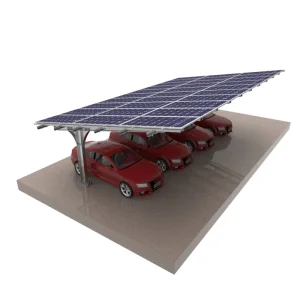
Building Information Modeling (BIM) tools allow seamless transition from architectural designs to energy asset models. The software simulates real-time shadow casting from adjacent structures, tree growth, and seasonal elevations, enabling exact placement of individual solar cells and rapid prototyping of commercial carports.
Modern design pipelines are hosted entirely in the cloud, allowing field technicians, remote engineers, and factory production lines to collaborate on a single master file. Adjustments made to physical racking structural designs dynamically update the cable lengths, electrical maps, and delivery schedules at the manufacturing end.
The historical disconnect between solar design software and factory floor manufacturing has long been a primary source of project delay. Traditionally, software outputted DXF and PDF files that required manual conversion by mounting structure factories. Today, top-tier suppliers are creating direct API integrations. Designing a utility-scale tracker bracket system in a software suite now translates instantly to structural CNC instructions, laser cutting profiles, and automated zinc-coating specifications at the factory.
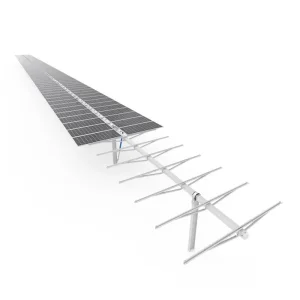
This deep integration is highly visible in products like automated GPS Single Axis Trackers. Software models define the exact mechanical stress tolerances, wind torsional responses, and latitude tracking algorithms, which are then burned directly into the local PLC (Programmable Logic Controller) firmware during production. The result is a system that works out of the box, optimized for the exact microclimatic wind loads predicted during the simulation phase.
A comparative overview of critical software indicators and the physical hardware adjustments required for optimization.
| Design Dimension | Software Assessment Variable | Associated Physical Hardware Component | Performance Optimization Goal |
|---|---|---|---|
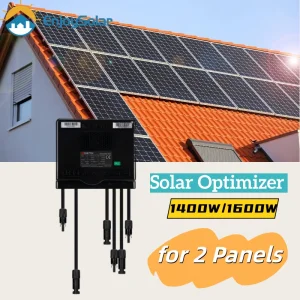
| Shading Losses | 3D Ray Tracing & Diffuse Reflection Models | Solar Power Optimizers (500W-1600W) | Eliminate string-level mismatch; isolate shaded panels to maintain global string performance. |
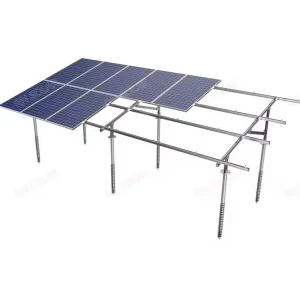
| Structural Load | Finite Element Analysis (FEA) for Wind Velocity | Single Pile Ground Racking & Carport Systems | Validate steel gauge thickness and anchoring depth based on structural soil reports. |
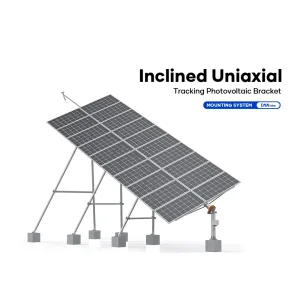
| Tracker Orientation | GPS Tracking Algorithmic Path Calculations | Tilted Single Axis GPS Sun Trackers | Reduce backtracking shadow overlap in morning/evening, boosting output by up to 25%. |
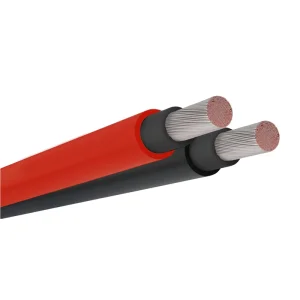
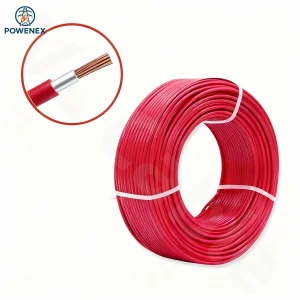
| Electrical Distribution | Ohmic Drop calculations & Volumetric Layout | 1.5kV DC H1Z2Z2-K Solar Cabling System | Keep total DC system voltage drop below 1.5% while minimizing copper/aluminum material usage. |
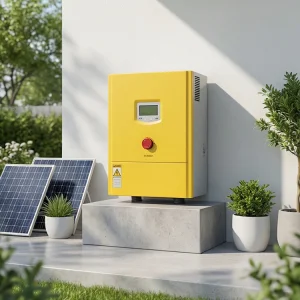
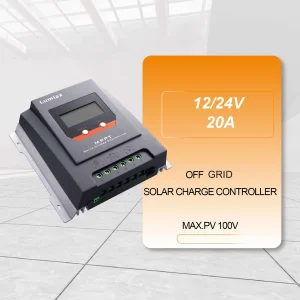
| System Regulation | Load Profile Matching & Hybrid Dispatching | MPPT Hybrid Controllers & Intelligent Remote Systems | Automate battery charging cycles and wind/solar hybrid blending based on load curve models. |
Professional One-Stop Solar Solutions Manufacturer & Global EPC Supplier.
Hangzhou RayBoost Solar Co., Ltd. is a professional manufacturer specializing in solar energy solutions, supported by advanced testing facilities and strong technical expertise. Strategically located in Hangzhou, just about 50 minutes by high-speed train from Shanghai Airport, the company benefits from convenient transportation and a well-developed industrial environment, enabling efficient service for global customers.
RayBoost Solar is dedicated to providing comprehensive one-stop solar energy solutions to clients worldwide. The company's business covers portable power stations, hybrid solar inverter systems for both on-grid and off-grid applications, energy storage systems, as well as integrated energy solutions for industrial, commercial, and residential use, including balcony solar systems. With its own manufacturing facilities, RayBoost Solar produces key components such as lithium batteries, solar inverters, portable power stations, and complete solar system combinations, ensuring reliable quality and supply chain control.
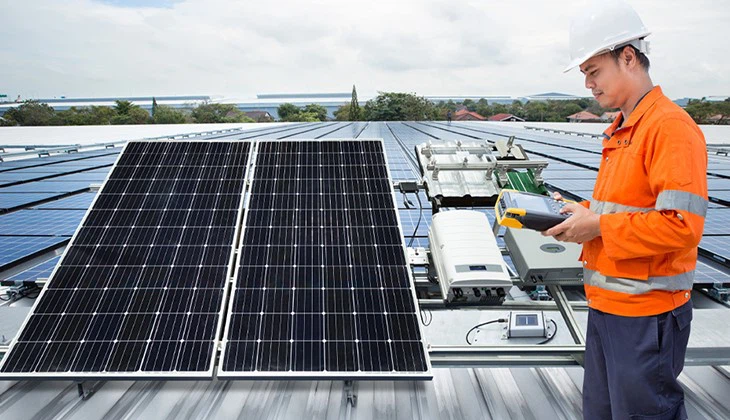
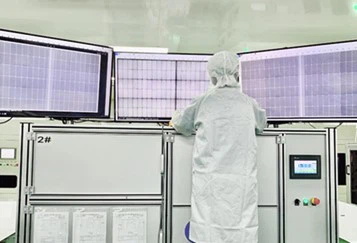
To maintain high standards, the company has introduced advanced automated production equipment from Italy and Japan. Combined with an experienced research and development team, RayBoost Solar continuously improves product performance, durability, and intelligent energy management capabilities, meeting the evolving demands of the global renewable energy market.
In terms of service, RayBoost Solar offers a full-process solution covering system design, production, sales, and after-sales support. Each project is customized according to the specific installation conditions. Before order confirmation, customers are required to provide site dimensions and photos, allowing the company to deliver accurate and optimized system solutions. While installation services are not included, detailed guidance and technical support are provided to ensure smooth project implementation.
Quality is a core priority at RayBoost Solar. All products undergo strict testing procedures and comply with international standards, ensuring safety, reliability, and long service life. Backed by solid manufacturing capabilities and a comprehensive quality control system, the company has built a strong reputation among its global partners.
Looking ahead, RayBoost Solar is committed to promoting clean and sustainable energy worldwide. By delivering innovative, efficient, and environmentally friendly solar solutions, the company aims to become a trusted long-term partner for customers across different markets. Visitors and partners from around the world are warmly welcomed to collaborate and achieve mutually beneficial growth.
Adapting PV structural configurations and software design inputs to regional electrical grids and terrain challenges.
In high-density residential markets, particularly in Western and Central Europe, spatial utilization is premium. The introduction of balcony solar systems and small-scale urban rooftop PV requires micro-level shade simulations. Solar design software analyzes the hourly shading profiles created by chimneys, dormers, and surrounding foliage. By combining this simulation data with hardware installations of Solar Panel Power Optimizers, system designers can isolate the power output degradation to only the impacted modules, ensuring the remaining unshaded panels operate at their peak MPP (Maximum Power Point). This is critical for meeting municipal feed-in tariff parameters and grid stability.
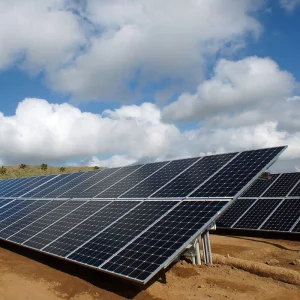
Utility installations in open deserts, plains, or coastal wind-prone areas face extreme mechanical stresses. Designers utilize wind-tunnel data integrated directly into structural design software to program automated wind-stow routines for trackers. Utilizing GPS automatic sun-tracking brackets, the solar field will automatically flatten to 0 degrees when on-site anemometers signal threshold-exceeding gust speeds. This dynamic safeguard requires robust components, such as high-strength Single-Pile Ground Mounting Structures and UV-resistant DC Photovoltaic Cables, engineered to handle sustained mechanical friction and extreme temperature ranges.
For remote industrial facilities—such as wastewater treatment plants, mining sites, and agricultural irrigation grids—relying on a single source of renewable power is risky. Design software models the complementary nature of wind (typically peaking at night) and solar (peaking during mid-day). This hybrid modeling maps the power curve outputs directly to a central Hybrid Wind Solar Charge Controller system with dump loads. The system dynamically diverts excess energy to storage or to auxiliary loads (such as low-temperature plasma reactors for automated air pollution control in wastewater facilities), preventing system overloads and maximizing grid autonomy.
Clear, authoritative technical answers resolving the most common integration queries of PV designers and plant developers.
A solar power optimizer performs module-level maximum power point tracking (MPPT). In standard string systems, the output of the entire string is constrained by the performance of the lowest-performing module (due to shading, dust, or mismatch). Optimizers isolate individual module behavior, allowing each panel to export its peak current regardless of neighboring conditions, boosting energy yields by up to 20% in complex shaded environments.
Increasing system voltage to 1.5kV DC allows designers to build longer module strings, reducing the absolute number of combiner boxes, fuses, and field terminations required. Additionally, higher voltage transmission reduces resistive line losses at the same current level, allowing the use of thinner conductors (such as 4mm² and 6mm² cross-sections) which significantly reduces overall copper and aluminum component costs.
To generate a precise and optimized solar racking or system design, clients must provide the exact layout dimensions of the installation area, geological soil reports (for ground piling depth), localized historical wind load and snow load profiles, and actual photos of the site. This data allows engineers to model structural stresses and calculate wind stow thresholds before finalizing the hardware package.
Solar carports act as massive sails that capture wind gusts from multiple directions. Software simulations calculate both downward force and upward wind uplift. Racking manufacturers utilize this data to calculate the required thickness of die-cast steel elements and structural columns. It also determines if single-post cantilever or double-post structures are required to maintain structural integrity and protect the vehicles below.
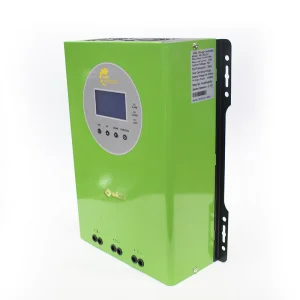
Hybrid controllers feature separate processing channels for wind and solar energy inputs. Because wind turbine generators produce AC power with varying frequency and voltage, the controller passes it through a rectifier and a manual/automatic dump load system to protect the batteries. Simultaneously, the solar DC input is processed through a standard MPPT buck converter. The combined power is then managed for battery charging or inverter output.
Reliable electrical, structural, and monitoring components designed to integrate with high-performance solar software projections.
 RayBoost Solar