Ensuring system stability, measurement reliability, and optimal yield in global commercial, utility, and residential PV installations.
How precise laboratory testing shapes global decarbonization strategies and boosts utility-scale solar asset returns.
In the era of hyper-scale energy transitions, solar power plants are no longer evaluated solely on nominal capacities. Today, investors, engineers, and developers look at the LCOE (Levelized Cost of Electricity) and the guaranteed 25-to-30-year operational efficiency of solar arrays. Critical to this calculation is the precision validation of photovoltaic (PV) modules at the time of manufacture. This is where high-precision solar simulators serve as the definitive benchmark.
Solar simulators—systems designed to replicate the spectral distribution, spatial uniformity, and temporal stability of natural sunlight—are the backbone of quality control for advanced PV technology platforms. Whether evaluating N-type TOPCon, Heterojunction (HJT), or the emerging Perovskite-Silicon tandem modules, a simulator’s accuracy dictates the ultimate commercial value of the product. Industrial scale factories rely on these machines to perform precise Current-Voltage (I-V) curve tracing, identify defects via Electroluminescence (EL) integration, and bin modules based on actual output.
Globally, manufacturers face the double-edged sword of rising cell efficiency and increasingly complex multi-junction architectures. The need for precise measurements under simulated solar conditions is paramount. Without precise AM1.5G spectral simulation, modules risk mislabeling, leading to significant mismatches in commercial arrays, decreased energy harvesting efficiency, and potential investment degradation.
Understanding the standard benchmark classifying class-leading solar measurement accuracy.
To accurately simulate standard terrestrial solar radiation (AM1.5G), the light source must match the spectrum across 6 predefined wavebands from 400nm to 1100nm. Our advanced optical filtering techniques provide Class AAA performance, minimizing spectral mismatch errors down to near-zero margins, which is critical for new high-bandgap perovskite layers.
Large-area PV modules require highly uniform exposure. Any hot-spot or dark region during simulation invalidates the overall I-V tracer measurement, skewing fill factor (FF) calculations. Standard industrial configurations deploy multi-lamp collimator arrays with custom reflectors to generate perfectly parallel, uniform light footprints.
Temporal stability measures the consistency of the light over time. In flash-type xenon simulators, the pulse width must remain stable for the entire data acquisition phase (typically 10ms to 150ms). Stable intensity ensures that the high-frequency electronic load measures capacitance-free and accurate open-circuit voltage (Voc) values.
Learn about Hangzhou RayBoost Solar Co., Ltd. and our commitment to advanced solar metrology and production excellence.
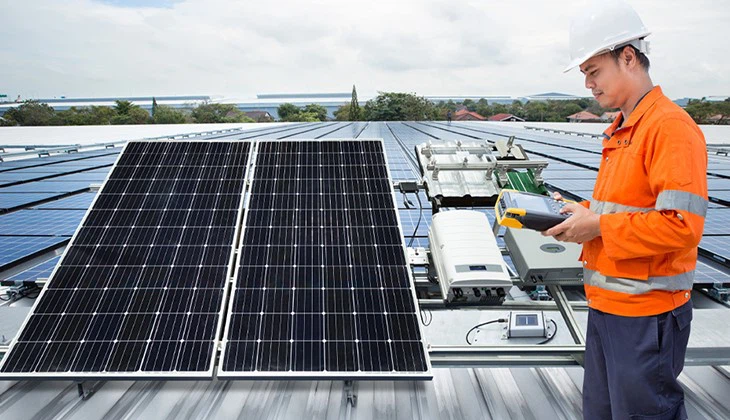
Hangzhou RayBoost Solar Co., Ltd. is a professional manufacturer specializing in solar energy solutions, supported by advanced testing facilities and strong technical expertise. Strategically located in Hangzhou, just about 50 minutes by high-speed train from Shanghai Airport, our company benefits from highly convenient transportation connections and a robust, well-developed industrial supply chain environment. This strategic positioning allows us to serve our global partners and customers with high-efficiency logistics and quick technical support turnaround.
RayBoost Solar is dedicated to providing comprehensive one-stop solar energy solutions to clients worldwide. The company's business portfolio covers portable power stations, hybrid solar inverter systems for both on-grid and off-grid configurations, residential/commercial energy storage systems (ESS), as well as integrated energy systems for industrial, commercial, and residential use, including innovative balcony solar systems. Operating our own modern manufacturing facilities, RayBoost Solar directly produces critical components such as advanced lithium battery packs, solar inverters, and complete solar system combinations, ensuring rigorous quality standards and total supply chain control.
To maintain high standards, the company has introduced advanced automated production equipment from Italy and Japan. Combined with an experienced, forward-thinking research and development team, RayBoost Solar continuously improves product performance, thermal durability, and intelligent energy management capabilities, successfully meeting the evolving demands of the global renewable energy market.
In terms of service, RayBoost Solar offers a full-process turnkey solution covering system design, engineering, production, sales, and post-installation technical support. Each system design is customized according to the customer's specific installation conditions. Before order confirmation, customers are requested to provide site dimensions and photos, allowing our technical engineering team to deliver accurate, optimized, and simulation-verified solar system designs. While installation services are not directly included, detailed guidance documents, video tutorials, and remote engineering support are provided to ensure smooth project implementation.
Quality remains our core priority at RayBoost Solar. All manufactured products undergo strict testing procedures using simulated solar conditions and comply with international standards, ensuring safety, reliability, and long-term service life. Backed by solid manufacturing capabilities and a comprehensive quality control system, our company has built a strong reputation among global solar installers and distributors.
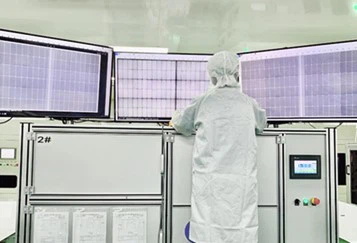
The transition from Xenon technology to Solid-State LED Simulators and future multi-junction measurement tools.
Traditional xenon flash lamps suffer from spectral degradation and limited bulb life. The industry is rapidly shifting towards solid-state LED-based simulators. By utilizing dozens of distinct, individually controllable LED wavelengths, modern simulators can achieve a dynamic spectral match that can be altered via software to mimic sunrise, sunset, or diffuse light conditions.
Perovskite-on-silicon tandem cells represent the future of ultra-high-efficiency PV. However, measuring them requires two distinct light spectra to evaluate both the top and bottom junctions simultaneously. Our R&D roadmap focuses on developing multi-source simulators capable of modulating light intensity dynamically across the absorption bands of both active materials.
In modern gigawatt-scale factories, cycle times are measured in seconds. Simulators must execute I-V measurements, EL imaging, and high-voltage insulation tests (Hi-Pot) within a 4 to 6-second window. Integrating optical characterization with fast robotic handling and real-time AI defect detection represents the next phase of manufacturing optimization.
How we ensure seamless deployment and operational certification in different regions.
Deploying solar systems and testing equipment globally requires navigating complex local regulatory frameworks. Whether complying with UL 61730 in North America, meeting the CE / EN directives in Europe, or satisfying national grid requirements, RayBoost Solar ensures all products are certified for safe and reliable operation.
Furthermore, to maintain Class AAA metrology parameters over time, localized calibration services are critical. Because solar simulators are sensitive laboratory instruments, environmental factors like ambient temperature, dust, and vibration can affect optical alignment. Through a combination of on-site calibration kits, reference cells certified by PTB/NREL, and remote diagnostics, we enable localized technicians to recalibrate systems with minimal downtime.
This localized support mechanism extends to custom system design. As a professional, integration-focused company, our engineering team ensures that the electrical configurations, balance of systems (BOS), and physical frameworks we supply conform perfectly to local structural wind loads, regional grid codes, and specific environmental demands (such as high-salinity coastal areas or extreme desert environments).
Essential technical insight regarding solar simulator classification, implementation, and RayBoost Solar solutions.
A Class AAA designation indicates that the simulator achieves Class A performance (the highest rating) in three fundamental areas: Spectral Match (deviation from the standard AM1.5G solar spectrum is within 0.75x to 1.25x), Spatial Uniformity (variation of light intensity over the designated target area is less than 2%), and Temporal Instability (temporal variation during testing is less than 2%). Class AAA ensures high-precision validation of solar cell power outputs.
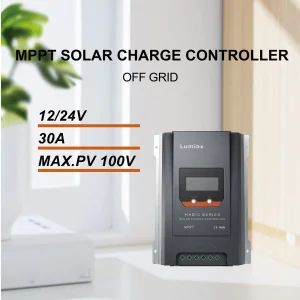
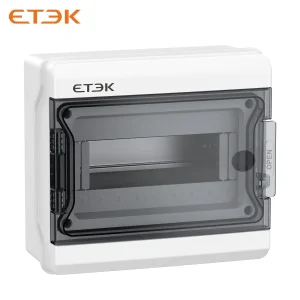
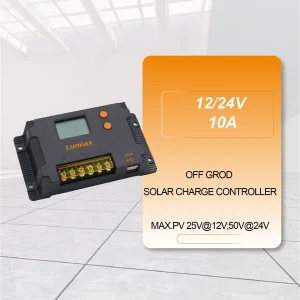
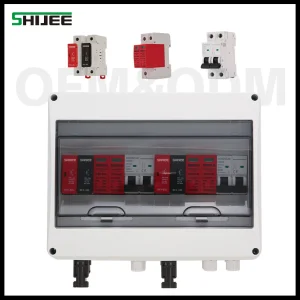
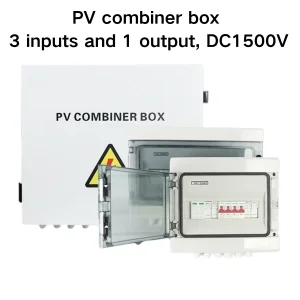
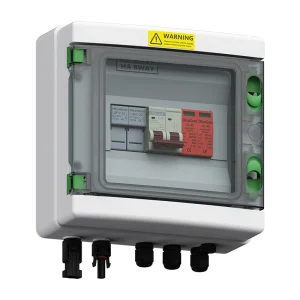
As part of our E-E-A-T manufacturing philosophy, we customize system designs to align with the physical layout, local weather parameters, and safety requirements of the installation site. Site photographs and dimensional inputs allow our engineering team to calculate accurate wind load ratings, design optimized structural layouts (e.g., mini-rails or trackers), and ensure matching combinations of DC combiner boxes and MPPT controllers.
Xenon Flash simulators release a high-intensity burst of light (typically 10-150ms), minimizing heat buildup on the PV cell during measurement. LED simulators utilize solid-state emitters to supply continuous (steady-state) illumination. LEDs offer longer lifetimes (up to 10x longer than Xenon tubes) and allow for real-time spectral tuning, making them ideal for modern multi-junction and perovskite testing.
Automated production lines ensure high mechanical precision, consistent weld points, and strict quality control tolerances. By removing manual handling stages in key battery pack assembly and electronic board manufacturing phases, we reduce product failure rates, enhance insulation capabilities, and guarantee that our hardware functions safely under demanding outdoor conditions.
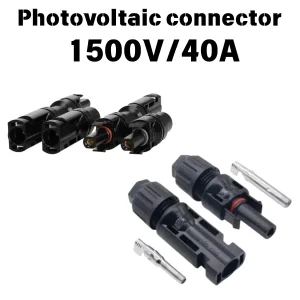
We offer comprehensive product warranties backed by our factory production capabilities. Replacement components (such as charge controllers, combiner box parts, and connector joints) are stocked directly at our facilities. Our technical team is available to assist with diagnostic verification and speed up replacements to keep downtime to a minimum.
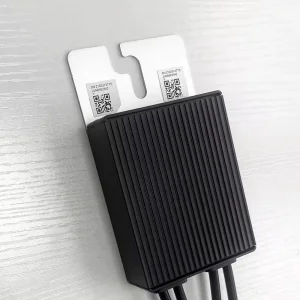
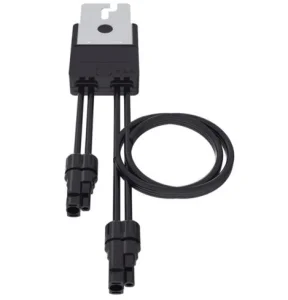
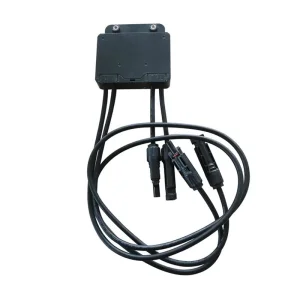
Complete your installation with industry-verified optimization and electrical safety components.
 RayBoost Solar