Explore our core high-performance systems deployed in commercial scale environments, designed to lower balance-of-system cost and optimize performance factors.
As the international community accelerates its pathway toward Net-Zero emissions by 2050, the structural demand for highly sophisticated, grid-ready, and resilient renewable energy assets has transitioned from simple hardware procurement to system-wide optimization. To achieve tangible Levelized Cost of Energy (LCOE) reductions, developers and utilities are looking beyond standard photovoltaic (PV) modules. They are seeking cohesive architectures that integrate intelligent tracking, smart environmental telemetry, automated maintenance protocols, and high-performance balance-of-system (BOS) components.
China has firmly established itself as the epicenter of this industrial evolution. Chinese manufacturing clusters do not merely benefit from scale; they drive innovation through hyper-integrated supply chains, dense engineering talent pools, and massive investments in advanced automation. By combining precision machining from import-grade Japanese and Italian tooling lines with domestically developed Internet of Things (IoT) monitoring systems, top-tier Chinese manufacturers now deliver custom-designed solar architectures that reliably operate under extreme environmental stress.
Every deployment is backed by certified materials (IEC, TUV, CE) and rigorous automated stress tests.
We mandate comprehensive site dimensions and photographic analyses to eliminate mismatch losses.
Deploying AI-driven cleaning robotics, tracking optimization, and real-time environmental monitoring.
Modern developers understand that a solar field's efficiency is only as good as its weakest link. If dust accumulation (soiling) is left unmitigated, generation drops by up to 25%. If environmental conditions at the central inverter sub-stations deviate from thermal limits, key protection circuits trigger derating or failure. Hence, the strategic sourcing of specialized elements—such as durable PV cabling, environmental telemetry units, smart combiners, and robust structural mountings—forms the true baseline of any commercially viable project.
Bridging complex utility scale criteria with tailored, site-specific physical parameters.
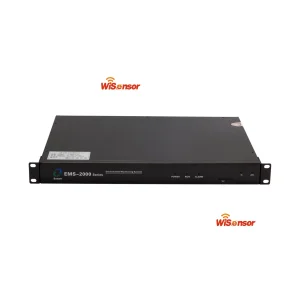
Government computing clusters and high-density enterprise data centers demand zero-uptime compromises. Integrating industrial-grade power and environmental monitoring systems assures real-time parameters (humidity, thermal anomalies, leak detection) are tracked remotely to trigger predictive cooling or isolation loops.
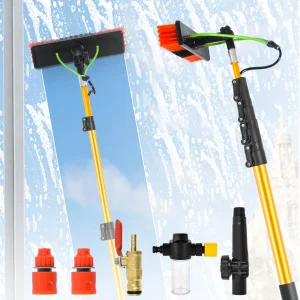
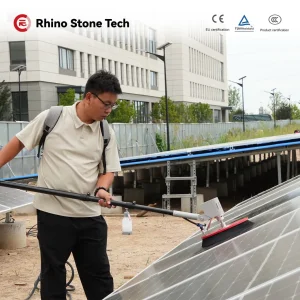
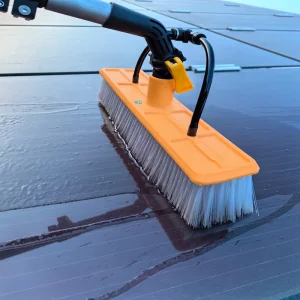
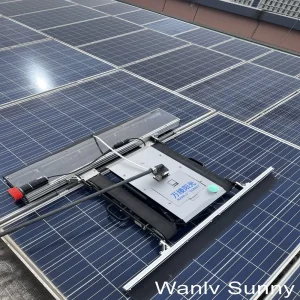
In desert or industrial zones where dust, sand, or agricultural particulate matter settles rapidly on solar arrays, we deploy autonomous PV cleaning robots. Transitioning from costly, water-intensive manual maintenance to intelligent dry-sweeping cycles ensures solar plants maintain a consistent 98%+ yield performance profile.
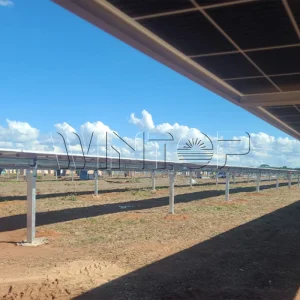
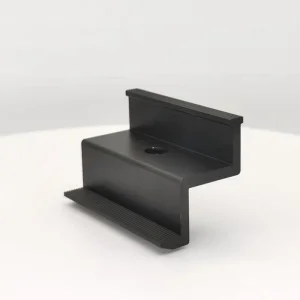
Coastal and mountainous areas require structures engineered for high aerodynamic shear. The implementation of fixed W-type structures built of structural-grade anodized aluminum guarantees high load tolerance. It mitigates micro-cracking across solar cells while maintaining compatibility with dual-axis trackers.
Data-driven performance benchmarks across critical solar sub-systems and infrastructure components.
| System Category | Critical Product Element | Technical Benchmark / Standard Compliance | Operational Efficiency Impact |
|---|---|---|---|
| PV Maintenance Automation | Automated PV Cleaning Robot Kit | IP65 Waterproofing, Dual Dry-Brush Sweeping, LiFePO4 Driven | Restores 15%-25% lost energy yields due to localized dust/soiling |
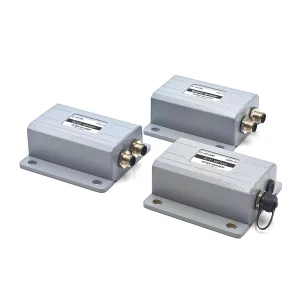
| Environmental Telemetry | Industrial Power & Environment Monitor | Remote SNMP/Modbus RTU, Multi-Channel Sensor Inputs | Prevents thermal runaway events in server rooms and substation cabins |
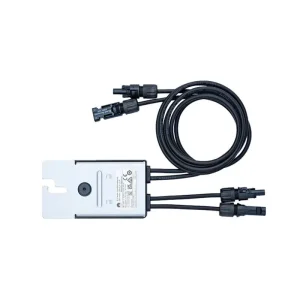
| High-Yield Power Optimization | Huawei SUN2000 Optimizer (450W-600W) | Max Efficiency 99.5%, Individual Module Level MPPT Tracking | Mitigates up to 30% mismatch losses from partial shade/uneven aging |
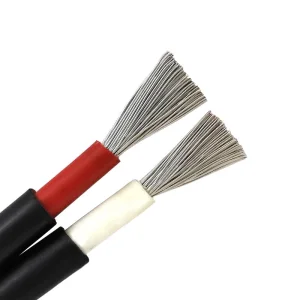
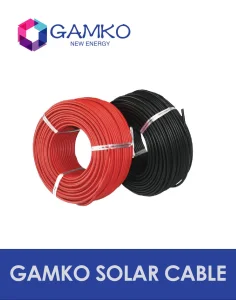
| BOS Infrastructure Cords | 6mm2 Tinned Copper PV DC Cable | TUV/EN50618 Compliant, Class 5 Flexible Conductor | Reduces long-term line resistance drop, guaranteed for 25+ years |
| Heavy Structural Mounts | Fixed W-Type Aluminum Ground Structure | Anodized Al6005-T5, Stainless Steel SUS304 Hardware | Resists wind loads up to 60m/s and heavy snow accumulation (1.4KN/m2) |
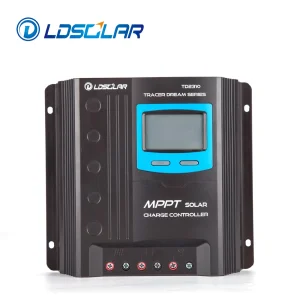
| System Charge Regulation | Ldsolar MPPT/PWM Controller Series | Tracking Efficiency >99.5%, Multi-stage Smart Charging | Extends off-grid deep cycle battery bank lifespan by up to 40% |
Global Destination Countries
Factory Quality Pass Rate
To Shanghai Airport Link
Custom Engineered Designs
True authority in solar energy manufacturing relies on rigorous quality control systems. At Hangzhou RayBoost Solar Co., Ltd., we have addressed the complex logistics and manufacturing requirements of international partners. Located in the industrial heart of Hangzhou, just 50 minutes away by high-speed rail from Shanghai Airport, we facilitate simple factory visits, container tracking, and rapid logistics out of Ningbo and Shanghai ports.
"A solar energy deployment is not a plug-and-play retail commodity. It is a long-term infrastructure investment. Accurate system modeling must precede raw manufacturing to ensure grid-compliance, physical wind-load tolerance, and long-term operating durability."
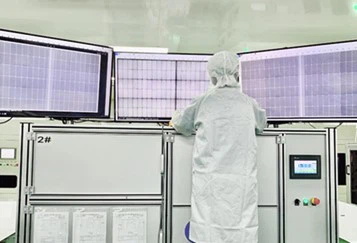
To ensure high standards are maintained at all scale levels, we have introduced automated production lines directly from Italy and Japan. These machines eliminate manual human errors in solar inverter assembly, battery weld consistency, and heavy-duty contact insertion. Backed by our experienced R&D engineering team, every portable power station, hybrid inverter, and energy storage unit undergoes extensive stress testing before packing.
Before order confirmation, we mandate that our clients supply us with precise project parameters. This prevents field errors and guarantees optimization:
While direct field installation services are not offered on-site by our factory teams, we support every shipment with detailed CAD schematics, wire diagrams, installation guides, and continuous remote video support to guarantee successful integration by local engineering partners.
A premier manufacturer and provider of one-stop, end-to-end solar energy solutions.
Hangzhou RayBoost Solar Co., Ltd. is a professional manufacturer specializing in solar energy solutions, supported by advanced testing facilities and strong technical expertise. Located in Hangzhou, just about 50 minutes by high-speed train from Shanghai Airport, the company benefits from convenient transportation and a well-developed industrial environment, enabling efficient service for global customers.
RayBoost Solar is dedicated to providing comprehensive one-stop solar energy solutions to clients worldwide. The company’s business covers portable power stations, hybrid solar inverter systems for both on-grid and off-grid applications, energy storage systems, as well as integrated energy solutions for industrial, commercial, and residential use, including balcony solar systems. With its own manufacturing facilities, RayBoost Solar produces key components such as lithium batteries, solar inverters, portable power stations, and complete solar system combinations, ensuring reliable quality and supply chain control.
To maintain high standards, the company has introduced advanced automated production equipment from Italy and Japan. Combined with an experienced research and development team, RayBoost Solar continuously improves product performance, durability, and intelligent energy management capabilities, meeting the evolving demands of the global renewable energy market.
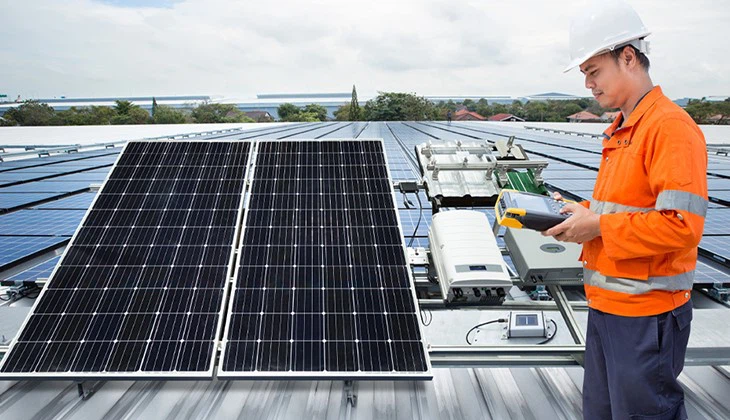
In terms of service, RayBoost Solar offers a full-process solution covering system design, production, sales, and after-sales support. Each project is customized according to the specific installation conditions. Before order confirmation, customers are required to provide site dimensions and photos, allowing the company to deliver accurate and optimized system solutions. While installation services are not included, detailed guidance and technical support are provided to ensure smooth project implementation.
Quality is a core priority at RayBoost Solar. All products undergo strict testing procedures and comply with international standards, ensuring safety, reliability, and long service life. Backed by solid manufacturing capabilities and a comprehensive quality control system, the company has built a strong reputation among its global partners.
Looking ahead, RayBoost Solar is committed to promoting clean and sustainable energy worldwide. By delivering innovative, efficient, and environmentally friendly solar solutions, the company aims to become a trusted long-term partner for customers across different markets. Visitors and partners from around the world are warmly welcomed to collaborate and achieve mutually beneficial growth.
Understanding future-proof investment vectors is vital when purchasing utility scale equipment. The market is transitioning toward higher automation, improved component communication, and long-term asset security:
Historically, commercial arrays suffered severe string-wide performance drop-offs if a single module was affected by bird droppings, foliage, or minor defects. By implementing dedicated optimization units (such as the Huawei SUN2000 Optimizer series), each module operates independently at its peak Maximum Power Point. This increases annual yields, facilitates module-level monitoring, and allows safe voltage shutdown for maintenance staff.
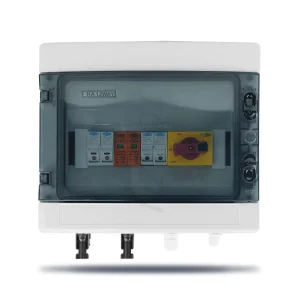
As solar installations expand in remote geographic areas, sending technicians for routine status checks becomes prohibitively expensive. Modern projects rely on integrated power and environmental monitoring systems. These devices aggregate real-time thermal, atmospheric, and circuit load parameters, transmitting them via secure Modbus protocols directly to remote operations centers to facilitate proactive troubleshooting.
Atmospheric moisture, UV radiation, and shifting thermal gradients cause standard insulation materials to degrade prematurely. Choosing UV-stabilized, tinned-copper PV cabling certified under modern EN standards prevents insulation failures and grounding faults, securing the ROI profile of utility arrays over their planned 25-to-30-year operational lifetimes.
While fixed structures offer lower initial capital expenditure, tracking brackets dynamically align modules with the solar arc throughout the day. This increases energy yields by up to 25% compared to fixed-angle mountings. When combined with smart dual-axis tracker components, plants optimize energy capture during high-value peak utility pricing hours.
Get authoritative answers to technical questions covering solar array installation, optimization, and system safety.
Answer: In standard string layouts, the current is restricted to the level of the lowest-performing module in the series. Shading, localized dust accumulation, or manufacturing variations in a single panel will bottleneck the output of the entire string. Module-level power electronics (MLPE), such as the SUN2000-450W/600W Optimizer, bypass this constraint by dynamically adjusting the voltage and current of each panel, maximizing energy harvest and lowering mismatch losses.
Answer: Customized systems demand accurate physical modeling. We require clients to share detailed site dimensions, photographs, and wind/snow loads before finalizing production plans. This information is used to run structural finite element analyses, ensuring ground-mount structures (like fixed W-type aluminum brackets) can withstand local weather events without causing structural fatigue or cell micro-cracking.
Answer: Standard copper is vulnerable to oxidation when exposed to moisture and air over long periods, leading to high electrical resistance and potential hotspots. Tinned copper features a thin protective layer of tin over the copper core, which prevents corrosion, ensures excellent solderability, and guarantees long-term durability in high-humidity or coastal installations.
Answer: Manual panel cleaning requires continuous water resources and manual labor, which can cause micro-cracking from staff walking on modules. Automated cleaning robots run regular dry-cleaning sweeps that remove sand and dust particles, maintaining maximum light transmittance and preventing hot spots without consuming water or risking structural stress.
Answer: High-performance server arrays produce substantial heat. Any failure in HVAC or power distribution units can quickly trigger hardware damage. An industrial-grade environmental monitoring system continuously tracks temperature, relative humidity, water leaks, and power stability. It sends immediate alerts via SNMP or Modbus protocols, allowing operators to intervene before safety systems shut down servers.
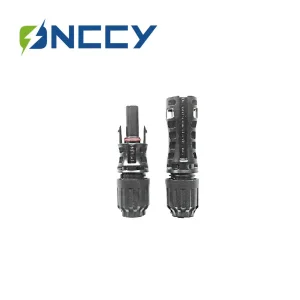
Integrate high-quality accessories, controllers, and electrical connection parts to complete your system configuration.
 RayBoost Solar