How to Properly Ground a Solar Panel System?

Time:2026-09-27 Author:Liam
0%

How to ground a solar panel system correctly? The answer begins with a fault-current path that stays continuous from the module frames to the equipment grounding system. A loose bonding washer or painted rail can interrupt that path. Small details matter.

NREL’s Best Practices for Operation and Maintenance of Photovoltaic and Energy Storage Systems identifies electrical safety and inspection as core parts of system maintenance. The NFPA Research Foundation’s Firefighter Safety and Photovoltaic Systems report also examines hazards associated with energized PV equipment. These sources support a practical point: grounding is not a box to check after installation. It must be designed, installed, and verified.

John Wiles, a longtime photovoltaic safety specialist, emphasized the need for dependable equipment bonding in his published PV safety guidance. Paraphrased: every exposed conductive part needs a reliable fault-current path. That principle informs the checks ahead, including compatible listed bonding hardware, secure connections, and continuity testing. Standards such as UL 2703 address bonding and grounding for PV mounting systems; local electrical requirements still determine what applies to a specific installation.

No single lug fits every array. Different modules, rails, and inverters can require different listed components. A rushed inspection may miss a hidden discontinuity. That deserves a second look. This introduction sets up a clear, safety-focused guide without treating one layout as universal.
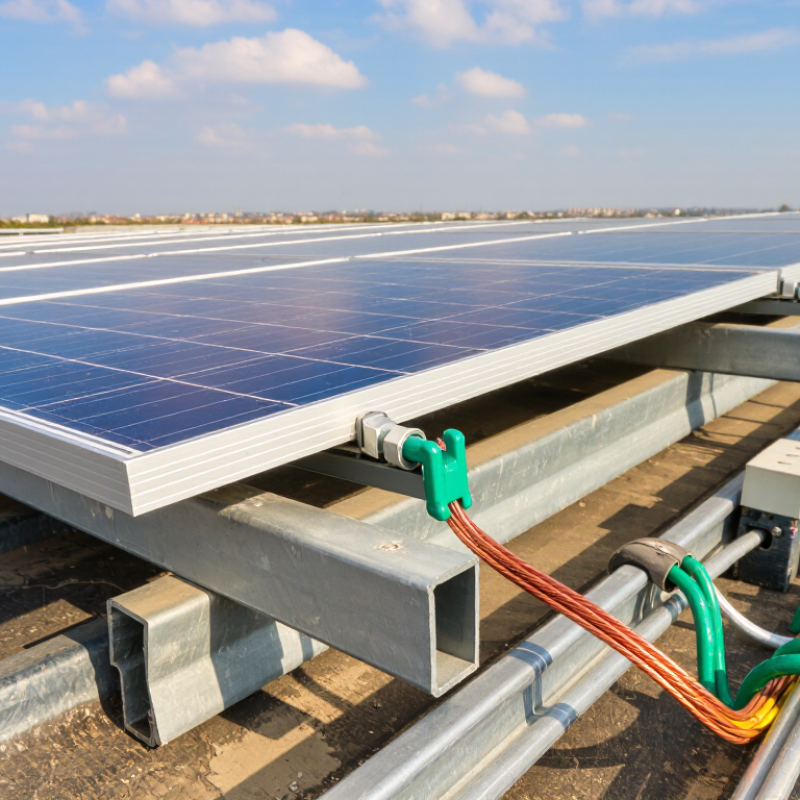
How to Properly Ground a Solar Panel System?

Grounding Principles and Electrical Code Requirements

Grounding in a solar panel system is not just a wire driven into the soil. It is a coordinated path for fault current, designed to help protective devices disconnect power when equipment becomes energized unexpectedly. The exact requirements depend on the electrical code adopted in your location, so check the current rules with the local authority. Details matter.

Metal module frames, rails, enclosures, and other conductive parts may need bonding through approved hardware and an equipment grounding conductor. A loose clamp can interrupt that path, even if the array looks secure. Follow the equipment instructions and code requirements for conductor sizing, connections, and corrosion protection. Do not assume that metal mounting rails provide a reliable electrical connection by themselves.

The grounding electrode system must also be addressed where the adopted code requires it. This does not mean the earth should serve as the normal return path for system current. Grounding, bonding, and overcurrent protection have distinct jobs. Confusing them is an easy mistake, and I have seen tidy-looking installations hide poor connections beneath panels. A qualified electrician can verify continuity, inspect terminations, and confirm that the system’s design matches local requirements before it is energized.

Identify Solar Components That Require Grounding and Bonding

How to Properly Ground a Solar Panel System?

Identify Solar Components That Require Grounding and Bonding

Solar arrays include several exposed metal parts that may need bonding: panel frames, mounting rails, inverter enclosures, and metal disconnect boxes. Bonding connects conductive parts so they remain electrically continuous. If a damaged wire energizes a rail, that continuity helps provide a path for fault current to protective equipment. The grounding method depends on the system design.

Look closely at every connection point. A painted rail or loose clamp can interrupt continuity, even when the hardware appears secure. Use grounding hardware and conductors approved for the equipment, and follow the installation instructions. Do not assume the panel frame alone provides a reliable connection. Small gaps matter.

The equipment grounding conductor typically connects exposed metal parts to the system’s grounding and fault-clearing network; it should not carry normal operating current. Some systems also require connections to a grounding electrode system, but the exact arrangement varies. DC conductors are not automatically grounded in every array. Grounding the wrong conductor can create hazards or interfere with protective devices. Check the system drawings and have a qualified installer verify the connections against applicable electrical requirements. A quick visual check is useful, but it cannot confirm electrical continuity.

Choose Grounding Conductors and an Approved Electrode

Choose grounding conductors by the system design and applicable electrical code, not by guesswork. The equipment grounding conductor connects exposed metal parts, such as panel frames and mounting rails, to the system’s grounding path. Its required size depends on circuit protection, conductor details, and local rules. A grounding electrode conductor serves a different purpose: it connects that path to an approved grounding electrode.

Use conductors rated for the location and compatible with the metals they touch. Copper is common, but corrosion can occur where dissimilar metals meet. Check the installation instructions and code tables before selecting a size. A bare wire that looks sturdy may still be undersized. Looks can mislead.

The electrode must be recognized by the applicable code, such as a permitted grounding electrode already serving the building. A ground rod is not automatically a complete solution; bonding and connection details matter. Keep connections accessible for inspection, and protect conductors from sharp edges and physical damage. I have seen tidy-looking installations hide loose clamps, so appearance alone proves little. When the existing grounding system is unclear, have a qualified electrician verify the electrode, conductor sizing, and bonding before energizing the array.

Grounding electrode conductor sizing for solar systems

Under NEC 250.66, the grounding electrode conductor connected to a rod, pipe, or plate electrode is not required to be larger than 6 AWG copper; for a concrete-encased electrode, it is not required to be larger than 4 AWG copper. These are size limits for these electrode connections—not general sizing rules for every solar grounding or bonding conductor. Verify requirements in the locally adopted code.

Bond the Panels, Mounting System, Inverter, and Equipment

How to Properly Ground a Solar Panel System?

A safe solar installation bonds the panels, mounting rails, inverter, and exposed metal equipment into a continuous fault-current path. Bonding connects conductive parts; grounding connects the system to earth. They work together, but they are not interchangeable. Use listed bonding hardware at rail joints, and verify that clamps pierce coatings as designed. A loose lug or painted contact can interrupt continuity. Follow the equipment instructions and applicable electrical requirements; have a qualified electrician verify the finished work.

The IEA PVPS Snapshot of Global PV Markets 2024 reports that global solar capacity passed 1.6 terawatts in 2023. That scale makes consistent installation and maintenance practices important. NREL’s Best Practices for Operation and Maintenance of Photovoltaic and Energy Storage Systems recommends planned inspection and documentation. Check bonding jumpers, grounding conductors, inverter connections, and signs of corrosion or heat damage. Record readings and repairs; a visual check alone can miss a poor connection. Small details matter.

Tips: Use compatible lugs and conductors, keep metal-to-metal contact clean, and torque terminals to the manufacturer’s specified value. Never assume the mounting frame is bonded just because the panels are attached. If continuity is uncertain, stop and arrange a qualified test. I would recheck after roof work, too—those small repairs can disturb a connection.

Inspect Connections and Verify Grounding System Compliance

A properly grounded solar panel system needs more than a grounding wire that looks secure. Inspect the bonding points between module frames, mounting rails, and the equipment grounding conductor. Look for loose hardware, corrosion, paint beneath contact points, or damaged insulation. These small defects can interrupt electrical continuity. Use a suitable meter to check connections, and compare readings with the system design and applicable electrical requirements. Do not rely on appearance alone.

Tips: Photograph each connection before and after inspection. Check that grounding conductors are protected from sharp edges and weather exposure. Keep records of test results, repairs, and inspection dates. If a reading seems inconsistent, pause and investigate rather than assuming the meter is wrong.

Verify that the grounding arrangement matches the approved plans and local electrical codes. Requirements can vary by location and system configuration, so consult the authority responsible for inspection. A qualified solar electrician can assess bonding, conductor sizing, and continuity using appropriate test equipment. Disconnecting or testing energized equipment can be hazardous; follow proper isolation procedures and use trained personnel. One detail is easy to miss: a tidy installation may still contain a weak connection. I have seen that assumption cause unnecessary rework. Recheck after repairs, and document what changed.

FAQS

What does grounding do in a solar panel system?

It helps provide a fault-current path so protective equipment can disconnect power. Grounding is not just a wire in soil.

Which solar components may need bonding?

Exposed metal parts may include panel frames, mounting rails, inverter enclosures, and metal disconnect boxes. The system design determines the exact arrangement.

Can mounting rails provide a reliable electrical connection by themselves?

Not necessarily. Paint, corrosion, or a loose clamp can interrupt electrical continuity. Looks can deceive.

Is the earth the normal return path for system current?

No. Grounding, bonding, and overcurrent protection have different functions. Confusing them can create problems.

Are all solar array DC conductors grounded?

No. Some systems use different arrangements. Grounding the wrong conductor may create hazards or affect protective devices.

How can grounding connections be inspected?

Look for loose hardware, corrosion, paint beneath contact points, and damaged insulation. A visual check alone cannot confirm continuity.

What records are useful after an inspection or repair?

Keep dated photographs, test results, and notes about repairs. Recheck the connections after work is complete.

Who should verify that the system meets local requirements?

A qualified solar electrician can check bonding, conductor sizing, and continuity. Requirements vary by location, so confirm them with the relevant local authority.

Conclusion

Properly grounding a solar panel system helps protect people and equipment by providing a safe path for fault current and reducing electrical hazards. Begin by understanding the grounding principles and applicable electrical-code requirements for the installation. Identify which components need grounding or bonding, including the panels, mounting hardware, inverter, and other equipment, and follow the system design and local requirements when selecting grounding conductors and an approved grounding electrode.

How to ground a solar panel system correctly? Use compatible conductors and connections to bond the required components into a continuous grounding system. Secure each connection, protect conductors from damage, and check that the electrode and bonding points are suitable for the installation. Finish by inspecting the system for loose, missing, or corroded connections and verifying that it meets applicable code requirements. When the design or requirements are unclear, consult a qualified electrical professional before energizing the system.

Liam

Liam

Liam is a dedicated marketing professional with a profound expertise in the industry, where he excels at highlighting the unique advantages of our core products. With a keen understanding of market trends and consumer needs, Liam frequently updates our company’s professional blog, providing......