Connecting a solar controller to a battery is essential for maximizing energy efficiency. According to Dr. Emily Carter, a solar energy expert at GreenTech Innovations, “Properly linking your solar controller to a battery ensures reliable energy storage and usage.” Understanding how to connect a solar controller to a battery? It requires both knowledge and experience.
A solar controller regulates the flow of energy from solar panels to batteries. This step is critical to prevent overcharging and extend the battery's life. Many new users may not recognize the importance of matching voltages or understanding wire specifications. These details can significantly influence overall performance.
As you embark on this task, keep in mind that mistakes can be costly. Poor connections may lead to battery damage. Thus, familiarity with basic wiring principles is crucial. Reflecting on common pitfalls will improve your installation process. Gaining insights from experts like Dr. Carter will deepen your understanding and refine your technique.
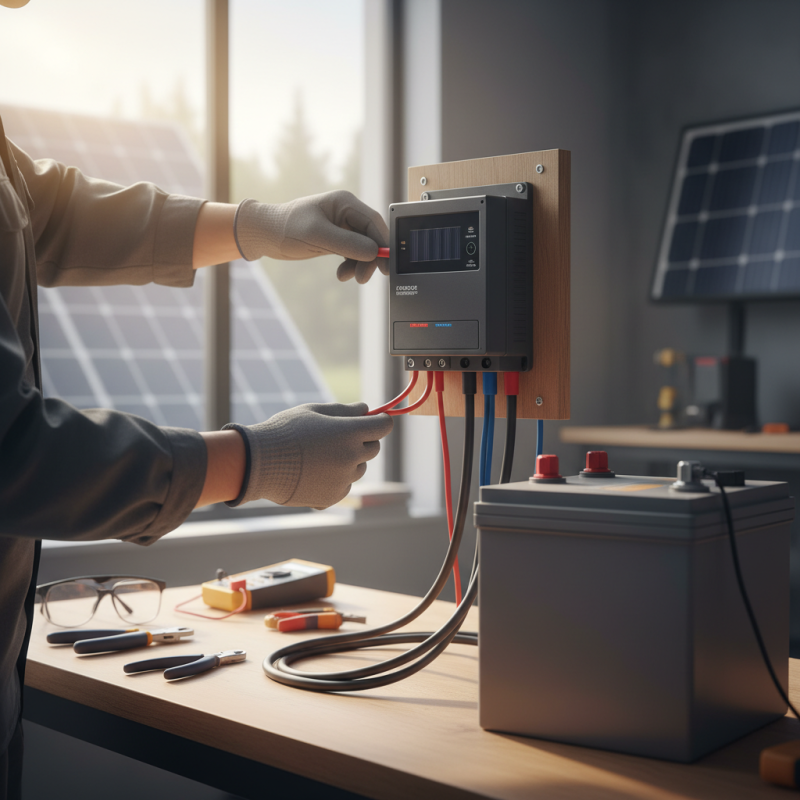
When connecting a solar controller to a battery, compatibility is essential. Not all solar controllers work with every battery type. Commonly used batteries include lead-acid, lithium-ion, and gel batteries. Each has different charging requirements. Understanding these needs ensures efficient energy transfer and prolongs battery life.
Tips: Always check your battery voltage before connecting. Mismatched voltages can lead to equipment failure. Use thick cables to minimize power loss during transfer. Additionally, monitor battery temperature. Overheating can damage your battery and reduce its lifespan.
Consider the solar controller’s settings. Some controllers allow adjustments for battery type. Choosing the wrong setting may lead to undercharging or overcharging. This negligence could shorten the battery's lifespan significantly. Reflect on your choices regularly to ensure optimal performance and longevity. Test your system periodically to catch any performance dips early.
Before connecting a solar controller to a battery, safety precautions are vital. Ensure the solar controller is compatible with your battery type. According to the National Renewable Energy Laboratory, mismatched connections can lead to inefficiencies, or worse, damage. Always verify voltage ratings. Connecting different voltages can cause serious failures.
Keep your workspace organized. It minimizes errors during installation. Disconnect the battery before making any connections. This simple step can prevent short circuits. The Solar Energy Industries Association recommends wearing insulated gloves and goggles. These protect against accidental electrical shocks. It's wise to have a fire extinguisher nearby too.
Tips: Double-check all connections. A loose wire may lead to inadequate charging. Engage a multimeter to verify voltages before and after the installation. Regularly inspect connections after setup to ensure everything remains secure. Remember, the goal is safe, optimal energy use from your solar setup.
This bar chart displays the efficiency of different solar controllers when connected to a battery, indicating the optimal use of energy storage. The data reflects the average charging efficiency percentage for typical solar controllers under standard conditions.
Connecting a solar controller to a battery is essential for maximizing solar energy use. The process is straightforward but requires attention to detail. Begin by selecting the right gauge wire for your setup. The American Wire Gauge (AWG) provides a key reference for this. Typically, a 10 AWG wire is suitable for most small systems, allowing efficient current transmission without significant energy loss.
When connecting, ensure the solar controller’s terminals are clearly marked. The positive terminal from the solar panel connects to the positive input of the controller. Similarly, connect the negative terminal to the controller. Experts emphasize that a solid connection prevents voltage drops, which can affect performance. It's crucial to check tightness. Loose connections can lead to overheating.
**Tips:** Use a multimeter to double-check voltage levels. This helps ensure proper connections and operational efficiency. According to data from the Solar Energy Industries Association, effective connections can increase system efficiency by up to 20%. Regular maintenance of your connections helps avoid common pitfalls, like corrosion.
Finally, always follow safety guidelines when working with electrical systems. Even minor mistakes can lead to hazards, such as short circuits or damage to components. Taking the time to review details can make all the difference in your solar setup's reliability.
Testing your connection between a solar controller and a battery is crucial for efficiency. According to the Solar Energy Industries Association, a properly connected system can increase energy capture by up to 30%. However, many users overlook basic testing, which can lead to underperformance.
To begin testing, use a multimeter to check voltage levels at the battery and the solar controller terminals. Ensure that the voltage matches the specifications in your controller’s manual. A significant voltage drop may indicate a weak connection. The National Renewable Energy Laboratory reports that improper connections could reduce charge rates by up to 15%. Checking connectors for tightness can prevent this issue.
After verifying voltage levels, test the system under load. Run a device powered by the battery while monitoring the voltage. If voltage drops below optimal levels, further inspection is needed. Sometimes, cables or connectors can be faulty or too small for the current, impacting performance. Regular monitoring can help identify such issues early, preventing larger failures down the line. Remember, vigilance in testing not only optimizes performance but also extends the lifespan of your solar energy system.
Connecting a solar controller to a battery is crucial for efficient energy use. However, issues may arise during this process. A common problem is inadequate wiring, which can lead to energy loss. According to the National Renewable Energy Laboratory (NREL), using the correct wire gauge can help prevent voltage drop. For instance, a 10 AWG wire works efficiently for systems up to 30 feet, while a 6 AWG wire is better for larger distances.
Occasionally, users encounter reversed polarity connections. This mistake can damage the solar controller. A straightforward troubleshooting tip is to check the battery and controller terminals before making connections. Additionally, it helps to measure voltage with a multimeter. This can confirm proper connection, with ideal voltage readings typically between 12.6V and 14.4V for fully charged batteries.
Another issue involves temperature fluctuations affecting battery performance. Batteries discharge faster in cold weather. The Battery University notes that lead-acid batteries can lose about 20% of their capacity at zero degrees Celsius. Users should consider temperature compensation features in their solar controllers to optimize battery management. Addressing these common problems can enhance the overall efficiency of solar systems.
| Connection Type | Recommended Voltage | Wire Gauge | Common Issues | Troubleshooting Tips |
|---|---|---|---|---|
| Solar Panel to Controller | 12V / 24V | 10 AWG | No output from panel | Check panel orientation towards sunlight |
| Controller to Battery | 12V / 24V | 8 AWG | Battery not charging | Verify battery voltage and connections |
| Load to Controller | 12V / 24V | 12 AWG | Overloading | Reduce load, check specifications |
| Ground Connections | N/A | 8 AWG | Inconsistent performance | Ensure all ground connections are secure |
: Not all solar controllers work with every battery type. Mismatched types can reduce efficiency and battery life.
Reversed polarity connections are a common issue. This error can damage the solar controller significantly.
Use a multimeter to measure voltage levels. Ideal readings are usually between 12.6V and 14.4V for fully charged batteries.
A 10 AWG wire is suitable for most small systems. This gauge minimizes energy loss during transfer.
Excess heat can damage the battery and reduce its lifespan. Regularly monitor your battery temperature to avoid this.
Inspect the connections and wiring. Ensure all connections are tight and use the correct wire gauge to prevent issues.
Testing periodically allows you to catch performance dips early. Regular maintenance can enhance overall system efficiency.
Always review safety protocols before working on electrical systems. Small mistakes can lead to hazardous issues, like short circuits.
Batteries discharge faster in cold weather. Lead-acid batteries can lose about 20% capacity at zero degrees Celsius.
Some controllers allow settings adjustments for battery type. Choosing the wrong setting may cause undercharging or overcharging.
In the article titled "How to Connect a Solar Controller to a Battery for Optimal Use?", readers are provided with a comprehensive guide on the essential aspects of connecting a solar controller to a battery. It begins by emphasizing the importance of understanding solar controllers and ensuring battery compatibility. The article highlights necessary safety precautions to take before making any connections, ensuring that users are well-informed about potential hazards.
Following the safety guidelines, a step-by-step process is offered to effectively connect a solar controller to a battery, making the procedure accessible even for beginners. After the connection, testing the setup for optimal performance is crucial to ensure everything functions correctly. Lastly, the article addresses common troubleshooting issues that may arise, providing valuable solutions to enhance user experience. This structured approach equips readers with the knowledge they need to confidently answer the question, "How to connect a solar controller to a battery?

RayBoost Solar