China Top 10 Differences Between Monocrystalline and Polycrystalline?

Time:2026-05-05 Author:Oliver
0%

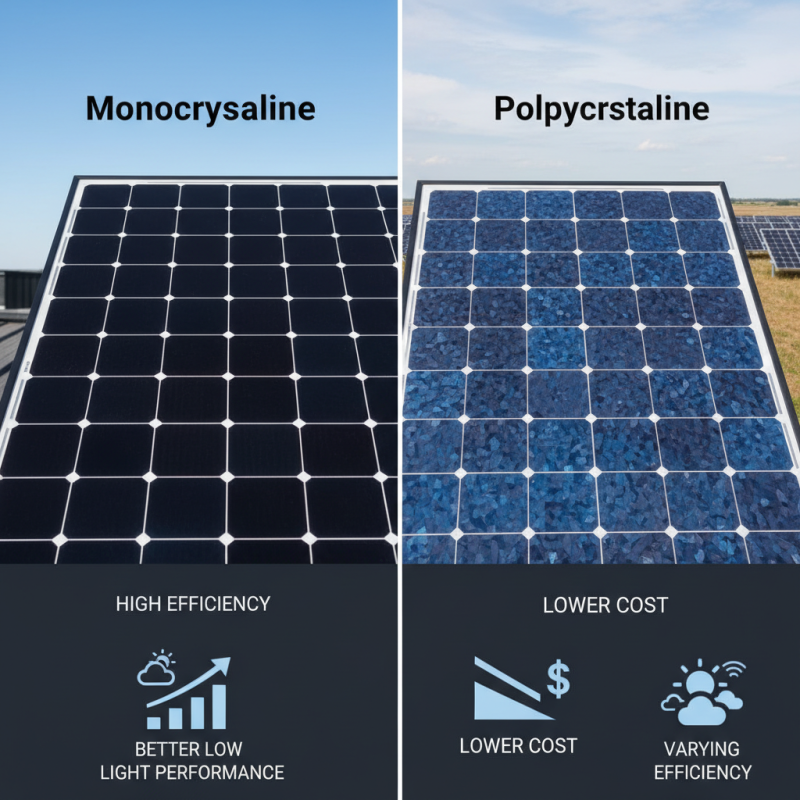
When considering solar panels, a common question arises: What is the difference between monocrystalline and polycrystalline? Understanding these differences is crucial for making informed choices. Monocrystalline panels are crafted from a single crystalline structure, offering high efficiency and better performance in low light. They are often more space-efficient, making them ideal for limited rooftop spaces.

In contrast, polycrystalline panels consist of multiple crystals. They are generally more affordable, but their efficiency varies. Buyers frequently face the dilemma between upfront costs and long-term benefits. The choice may depend on individual energy needs and budget constraints.

Every decision carries weight. Monocrystalline panels shine in efficiency, yet they come with a higher price tag. Polycrystalline panels appeal to cost-conscious consumers. The landscape of solar technology is evolving, prompting consumers to weigh quality against affordability.
China Top 10 Differences Between Monocrystalline and Polycrystalline?

Differences in Production Processes of Monocrystalline and Polycrystalline Solar Cells

Monocrystalline and polycrystalline solar cells differ significantly in their production processes. Monocrystalline cells are crafted from single crystal structures. These structures ensure a uniform and efficient flow of electricity. The manufacturing process involves a method called the Czochralski process. In this method, silicon is melted and a seed crystal is dipped into it. This allows a single crystal to grow. The result is a more efficient solar cell.

Polycrystalline cells, however, are made from multiple silicon crystals. The production process includes melting silicon fragments together in a mold. This creates a more fragmented structure. While this method is less costly, it results in lower efficiency compared to monocrystalline cells.

Tips: If you're considering solar panels, analyze your energy needs. Take note that the upfront costs can vary. Choosing the right type can affect long-term savings. The manufacturing differences impact performance and pricing directly.

Efficiency Comparison: Monocrystalline vs. Polycrystalline Solar Panels

When it comes to solar panels, efficiency is a vital factor to consider. Monocrystalline and polycrystalline panels differ significantly in this regard. Monocrystalline panels are known for their higher efficiency rates. They can convert more sunlight into electricity, especially in limited spaces. This makes them suitable for urban areas where roof space is at a premium.

Polycrystalline panels, on the other hand, tend to be less efficient. They are produced from multiple silicon fragments, which can reduce their energy output. However, they are often more affordable. This makes them a common choice for larger installations where space is not an issue. Buyers must weigh the initial cost against long-term performance. It’s not always straightforward, as lower efficiency can lead to increased energy bills over time.

Both panel types come with pros and cons. Weather conditions also affect their performance. Monocrystalline panels perform better in low light and high temperatures, while polycrystalline might lag. Therefore, the decision does require careful thought. Choosing the right solar panel involves more than just efficiency. It requires an understanding of your specific energy needs and installation conditions.

China Top 10 Differences Between Monocrystalline and Polycrystalline

Difference Monocrystalline Polycrystalline
Efficiency 15% - 22% 13% - 17%
Temperature Coefficient Lower (better performance in heat) Higher (performance drops in heat)
Cost Higher initial cost Lower initial cost
Lifespan 25 years+ 20 years+
Space Efficiency More space efficient (higher power output per area) Less space efficient (lower power output per area)
Aesthetics More uniform color (black) Bluish color (less uniform)
Production Process Requires more energy Less energy-intensive
Power Output Higher power output Lower power output
Market Availability Widely available Very widely available
Environmental Impact More environmental concerns due to production Less environmental impact

Cost Analysis: Monocrystalline and Polycrystalline Solar Technologies

The cost analysis of monocrystalline and polycrystalline solar technologies reveals significant differences. Monocrystalline panels tend to be more efficient. They can achieve efficiencies of over 22%. This means they require less space to produce the same energy output. However, their manufacturing process is more complex, resulting in higher costs. Reports indicate that the average price for monocrystalline panels can reach $0.80 to $1.20 per watt.

On the other hand, polycrystalline panels are generally cheaper. Their costs range from $0.60 to $0.90 per watt. This price difference appeals to budget-conscious consumers. However, the trade-off is in efficiency. Polycrystalline panels usually have efficiencies between 15% to 20%. Consequently, homeowners may need more panels to achieve their energy goals. Evaluating the overall performance and long-term savings can be challenging.

While the initial investment for monocrystalline is higher, the long-term energy savings can offset that cost. It’s crucial to analyze specific energy needs and roof space. Each installation has unique considerations. Potential buyers must weigh upfront costs against performance over time. Making an informed decision is essential, as solar technology continues evolving rapidly.

Performance Under Different Weather Conditions: A Comparative Study

Performance under varying weather conditions significantly influences the effectiveness of solar panels. Monocrystalline panels are known for their superior efficiency, generally around 15-20%. A report by the National Renewable Energy Laboratory suggests that they retain more performance during low light conditions, such as cloudy or rainy days. This can be crucial for areas with unpredictable weather.

In contrast, polycrystalline panels, while typically cheaper, exhibit reduced efficiency in the same conditions. Their average efficiency ranges from 13-16%. This means they may not convert enough sunlight into energy during less favorable weather. Industries looking to maximize output in diverse climates should carefully consider these differences.

Interestingly, installation factors also come into play. Monocrystalline panels may be preferred in urban areas with limited space due to their higher power output. However, in regions with consistent sunlight, polycrystalline could offer sufficient energy at a lower cost. Understanding these nuances is essential for making informed decisions. Not every solar panel suits every environment; choices should reflect actual conditions and long-term goals.

Performance Comparison of Monocrystalline vs. Polycrystalline Solar Panels

Lifespan and Durability of Monocrystalline vs. Polycrystalline Panels

When evaluating monocrystalline and polycrystalline solar panels, lifespan and durability stand out as key factors. Monocrystalline panels typically have a longer lifespan, often exceeding 25 years. Their robust design resists environmental stress better than polycrystalline. This resilience translates into fewer replacements and repairs over time.

In contrast, polycrystalline panels usually last around 20 years. They may be less durable due to their manufacturing process. This can lead to lower efficiency when exposed to heat and humidity. Additionally, the lower temperature coefficient of monocrystalline panels helps maintain performance in various conditions. However, polycrystalline options can be more cost-effective, making them appealing.

Choosing between the two ultimately requires balancing durability and budget. Monocrystalline offers a longer lifespan but at a higher price. Polycrystalline can save initial costs but might need replacement sooner. It's essential to evaluate all elements before making a decision, ensuring the right fit for individual needs. Each type has its advantages and challenges, which should be carefully weighed.

FAQS

: What are the main differences in production processes of monocrystalline and polycrystalline solar cells?

: Monocrystalline cells are made from single crystal structures, while polycrystalline cells consist of multiple silicon crystals.

How does the production process of monocrystalline cells work?

Monocrystalline cells use the Czochralski process, where a seed crystal is dipped in melted silicon to grow a single crystal.

Why are monocrystalline solar cells more efficient?

Their single crystal structure allows for a uniform and efficient flow of electricity, enhancing performance.

What is the cost difference between monocrystalline and polycrystalline solar cells?

Polycrystalline cells are generally cheaper to produce, but their efficiency is lower than monocrystalline cells.

How do these solar cells perform in low light conditions?

Monocrystalline panels perform better in low light, retaining more efficiency on cloudy days compared to polycrystalline panels.

Can the choice of solar panels affect long-term savings?

Yes, selecting the right type of solar panel impacts both initial costs and long-term energy savings.

What should be considered when choosing solar panels for different climates?

Analyze local weather and energy needs, as some panels perform better in various conditions than others.

Are there installation considerations for these solar panels?

Yes, monocrystalline panels may be preferred in urban areas due to their higher power output in limited space.

How does the structure of polycrystalline cells affect their performance?

Their fragmented structure results in lower efficiency, especially under poor weather conditions.

Should I only consider cost when choosing solar panels?

Not necessarily. Efficiency and performance are just as important for informed decision-making.

Conclusion

The article explores the key distinctions between monocrystalline and polycrystalline solar panels, addressing the question, "What is the difference between monocrystalline and polycrystalline?" It begins by examining the varied production processes used for each type of solar cell, highlighting how these methods influence overall efficiency. The efficiency comparison illustrates that monocrystalline panels tend to outperform their polycrystalline counterparts in energy generation, especially in limited space.

Additionally, the cost analysis reveals that while monocrystalline panels may have a higher upfront cost, their efficiency can lead to greater long-term savings. The performance of these solar technologies under different weather conditions is also discussed, noting that monocrystalline panels typically handle low-light situations better. Lastly, the article emphasizes the lifespan and durability of both types, with monocrystalline panels generally having a longer operational life. Overall, the analysis provides a comprehensive overview to help consumers make informed decisions regarding their solar energy investments.

Oliver

Oliver

Oliver is a seasoned marketing professional with a wealth of expertise in driving brand awareness and engagement. With a deep understanding of our company's product offerings, he consistently delivers high-quality content that enriches our professional blog. His insights not only shed light on......