What Is the best angle for solar panels in winter? It is a practical question with no universal answer. A fixed panel often performs well when tilted near the site’s latitude, while a winter-focused system usually needs a steeper angle. The U.S. National Renewable Energy Laboratory’s PVWatts guidance recognizes tilt and azimuth as important production inputs. Its modeling approach also shows why local weather, shading, and system design matter. Latitude alone cannot tell the whole story.
Dr. Andy Walker, a renewable-energy engineer and solar design author, offers a useful rule: “For a fixed system, the optimum tilt is usually close to the site latitude.” In winter, adding roughly 10 to 15 degrees can help panels face the lower midday sun. That adjustment may also shed snow more effectively. However, snow can remain on a steep roof. Roof structure matters. So does wind exposure. The International Energy Agency Photovoltaic Power Systems Programme reported more than 1.6 terawatts of global solar capacity by the end of 2023. Small angle improvements now affect a very large installed base.
Real installers often test the roof before changing the mounting angle. A nearby chimney may reduce winter output more than a five-degree adjustment. NREL’s solar-resource tools can estimate local irradiance, but field conditions still create surprises. The latitude rule is useful, not sacred. I may be too confident if I treat it as a final answer. This guide examines seasonal tilt, snow, shading, roof limits, and the trade-off between winter gains and annual production.
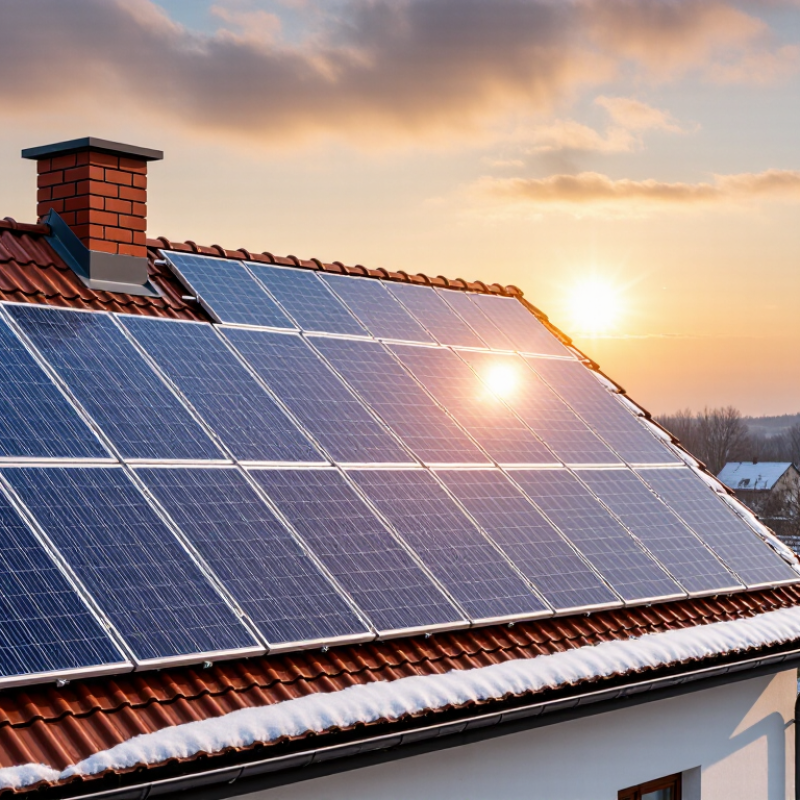
What Determines the Best Solar Panel Angle in Winter?
What Is the Best Solar Panel Angle in Winter?
What Determines the Best Solar Panel Angle in Winter?
Winter angle depends on more than latitude. The sun travels lower across the sky, especially near the winter solstice. At 40° north, solar noon reaches only about 26.5° above the horizon, according to NOAA solar-position calculations. A steeper panel can therefore face the winter sun more directly.
NREL’s PVWatts V8 documentation identifies tilt, azimuth, weather data, and surface reflectance as key inputs for photovoltaic output modeling. A practical starting point is a tilt near local latitude. For winter-focused production, installers often add 10° to 15°. A site near 40° latitude might use approximately 50° to 55°. That rule is useful, but not sacred.
Roof structure changes the answer. A fixed roof may not safely support a steeper frame. Snow also matters. IEA PVPS Task 13 reports that snow, shading, soiling, and system availability can significantly affect measured photovoltaic yield. Angles above 45° may help snow slide sooner, but wind loads can increase. Nearby trees can erase the benefit of a perfect tilt. Ground surfaces matter too, because bright snow can reflect extra light onto the panel. I would not promise one universal angle. Local solar modeling, structural review, and winter shading observations are more reliable than a simple formula. A small mistake can remain expensive.
What Is the Best Solar Panel Angle in Winter?
The best winter tilt is mainly determined by the installation’s latitude. A common planning rule is to set panels approximately 10–15° steeper than the latitude to better face the lower winter sun.
The values shown use the practical estimate: winter tilt = latitude + 15°. Actual performance can also be affected by roof direction, shading, snow, local weather, and seasonal electricity demand.
How Winter Sun Position Changes Solar Panel Performance
In winter, the sun travels lower across the sky, changing how a solar panel receives light. Its rays strike a fixed roof at a sharper angle. This reduces the effective sunlight reaching each cell, even on bright days. Shorter daylight also limits the production window. Snow, frost, and wet leaves can reduce output further. I have seen clear winter mornings produce less energy than cloudy summer afternoons.
A steeper panel angle often suits winter because it faces the lower sun more directly. A practical starting point is your local latitude plus 10 to 15 degrees. This is a guideline, not a guarantee. Roof direction, shade, weather, and panel spacing still matter. In northern regions, a steeper tilt can help snow slide away. However, excessive adjustment may increase wind exposure or installation problems. Measure the roof before changing anything.
Track production at midday for several winter weeks. Compare clear days, not just one unusually cold morning. A basic meter can show whether the angle improves daily output. Check shadows from chimneys, trees, and nearby buildings as the sun moves. I once focused too much on panel angle and overlooked a chimney shadow after noon. That mistake changed the result. Local solar maps and a qualified site assessment provide stronger evidence than a universal chart. Keep access safe when inspecting snow or hardware.
How to Calculate the Ideal Winter Panel Tilt
What Is the Best Solar Panel Angle in Winter?
The best winter tilt usually sits 10 to 15 degrees above your local latitude. A 35-degree latitude often suggests a 45-to-50-degree panel angle. This steeper position helps capture the lower winter sun. It can also encourage snow to slide away. That shortcut is useful, but not sacred.
For a more reliable calculation, identify your site latitude first. Then compare winter solar data using a photovoltaic performance model. The National Renewable Energy Laboratory’s PVWatts documentation evaluates tilt, azimuth, irradiance, temperature, and system losses. Enter several angles, such as latitude, latitude plus 10 degrees, and latitude plus 15 degrees. Compare the predicted winter energy, not only the annual total. A small difference may not justify a difficult roof adjustment.
Sunlight varies sharply with weather and horizon obstructions. The International Energy Agency Photovoltaic Power Systems Programme reported more than 400 GW of new photovoltaic capacity added globally in 2024, showing how strongly system design now depends on local optimization. For a practical check, measure the panel’s midday shadow on a clear December day. Keep the surface facing the equator, usually south in the Northern Hemisphere. In the Southern Hemisphere, face it north. Snow depth, wind exposure, and roof structure can change the answer. My first calculation may still be wrong. Recheck it with local irradiance data and a qualified installer.
What Is the Best Solar Panel Angle in Winter? — How to Calculate the Ideal Winter Panel Tilt
| Latitude Band |
Representative Latitude |
Recommended Winter Tilt |
Adjustment from Latitude |
Approximate Winter-Solstice Solar-Noon Altitude |
Practical Interpretation |
| Equatorial |
0° |
10°–15° |
+10° to +15° |
66.56° |
A modest tilt improves rainwater runoff and provides a useful winter starting point. |
| Low latitude |
15° |
25°–30° |
+10° to +15° |
51.56° |
Use the higher end when winter energy production is more important than summer production. |
| Subtropical |
30° |
40°–45° |
+10° to +15° |
36.56° |
A tilt near 45° is a practical winter setting for many fixed or manually adjustable systems. |
| Temperate |
45° |
55°–60° |
+10° to +15° |
21.56° |
The steeper angle helps the panel face the lower winter sun and can reduce snow accumulation. |
| High latitude |
60° |
70°–75° |
+10° to +15° |
6.56° |
A steep tilt is useful, but short daylight hours and snow cover may have a larger effect than angle alone. |
| Very high latitude |
65° |
75°–80° |
+10° to +15° |
1.56° |
Winter output is strongly affected by low sun elevation, shading, snow, and limited daylight duration. |
| Recommended starting formula |
Winter tilt ≈ site latitude + 10° to 15° |
| Winter-solstice solar-noon formula |
Solar-noon altitude ≈ 90° − |site latitude − solar declination|; solar declination is approximately −23.44° in the Northern Hemisphere winter. |
| Use note: The listed angles are practical fixed-panel starting points for the Northern Hemisphere. In the Southern Hemisphere, use the same absolute-latitude method during its winter season. The final angle should also account for roof direction, shading, snow, local weather, and whether the system is optimized for winter or annual energy production. |
How to Adjust Solar Panels for Snow and Weather Conditions
What Is the Best Solar Panel Angle in Winter?
Winter adjustment is mainly about snow, low sun, and changing weather. A practical starting point is your local latitude plus 10 to 15 degrees. This steeper angle can improve the sun’s winter-facing geometry and help snow slide away. However, roof structure and local wind loads matter more than a simple formula. The National Renewable Energy Laboratory’s PVWatts guidance shows that tilt and azimuth directly affect modeled annual energy production. It also warns that weather conditions can change real-world results.
Snow changes the calculation. The IEA PVPS Task 13 report notes that snow losses vary widely by climate, tilt, and system design. In snowy regions, short-term losses can become substantial, even when annual losses appear modest. A dark panel may warm quickly under sunlight, but ice at the lower frame can remain. Leave clearance below the array, keep drainage paths open, and never scrape frozen snow with hard tools. That mistake can damage the glass or surface coating. I have also found that a slightly steeper angle is not always better when winter winds are severe.
Tips: Check the mounting instructions and local wind data before adjusting anything. Remove only loose snow with a soft roof-safe tool. Do not pour hot water on panels. Inspect after heavy storms, especially around clamps, cables, and racking. A professional inspection is sensible when access is steep, icy, or uncertain.
How to Balance Winter Efficiency with Year-Round Solar Output
What Is the Best Solar Panel Angle in Winter?
Winter’s lower sun changes how sunlight reaches a solar panel. A practical winter angle is often 10 to 15 degrees steeper than the local latitude. This position can improve midday exposure when the sun stays close to the horizon. It may also help snow slide from the panel surface. Snow buildup can block nearly all incoming light. However, the best angle depends on roof design, latitude, shading, wind, and local snowfall.
Year-round output requires a compromise. A fixed panel angle near the local latitude often produces dependable annual results. Increasing the tilt for winter can improve cold-season production, but summer performance may decline slightly. Adjustable mounts offer more control, although changing them safely takes time and proper access. Many homeowners leave panels fixed because the annual gain may not justify the added complexity.
I have seen small shadows matter more than a perfect angle. A nearby chimney, winter tree branch, or roof edge can reduce output during the most valuable hours. Check the roof around December and June, not only on installation day. Keep ventilation space beneath the panels, and follow local structural requirements for heavy snow and strong wind. Online angle calculators help, but they cannot inspect your roof. Even careful estimates can be wrong. Reviewing monthly production data can reveal whether a seasonal adjustment is truly worthwhile.
FAQS
A practical starting point is local latitude plus 10 to 15 degrees.
The winter sun travels lower across the sky.
No. Roof direction, nearby shade, snow, wind, and panel spacing also affect production.
Fixed panels near local latitude often provide reliable annual production.
Yes, angles above about 45° may help snow slide sooner.
A fixed roof may not safely support a steep mounting frame.
Winter shadows can be especially damaging because the sun stays low.
Adjustable mounts offer more control between winter and summer.
Conclusion
Winter changes the sun’s position, causing its rays to arrive at a lower angle and reducing the energy captured by a flat or shallowly tilted panel. What is the best angle for solar panels in winter? In general, panels perform best when tilted more steeply than they are during summer, often by adding roughly 10 to 15 degrees to the location’s latitude. However, the ideal setting depends on local latitude, roof direction, shading, and the amount of winter sunlight available.
A practical winter angle should also account for snow, rain, wind, and maintenance. A steeper tilt can help snow slide off and improve exposure, but panels should never be adjusted in unsafe weather conditions. Homeowners should compare winter gains with year-round production before making seasonal changes. For many systems, a moderate fixed angle offers the best balance, while adjustable mounts can provide better seasonal performance when regular and safe repositioning is possible.

 RayBoost Solar